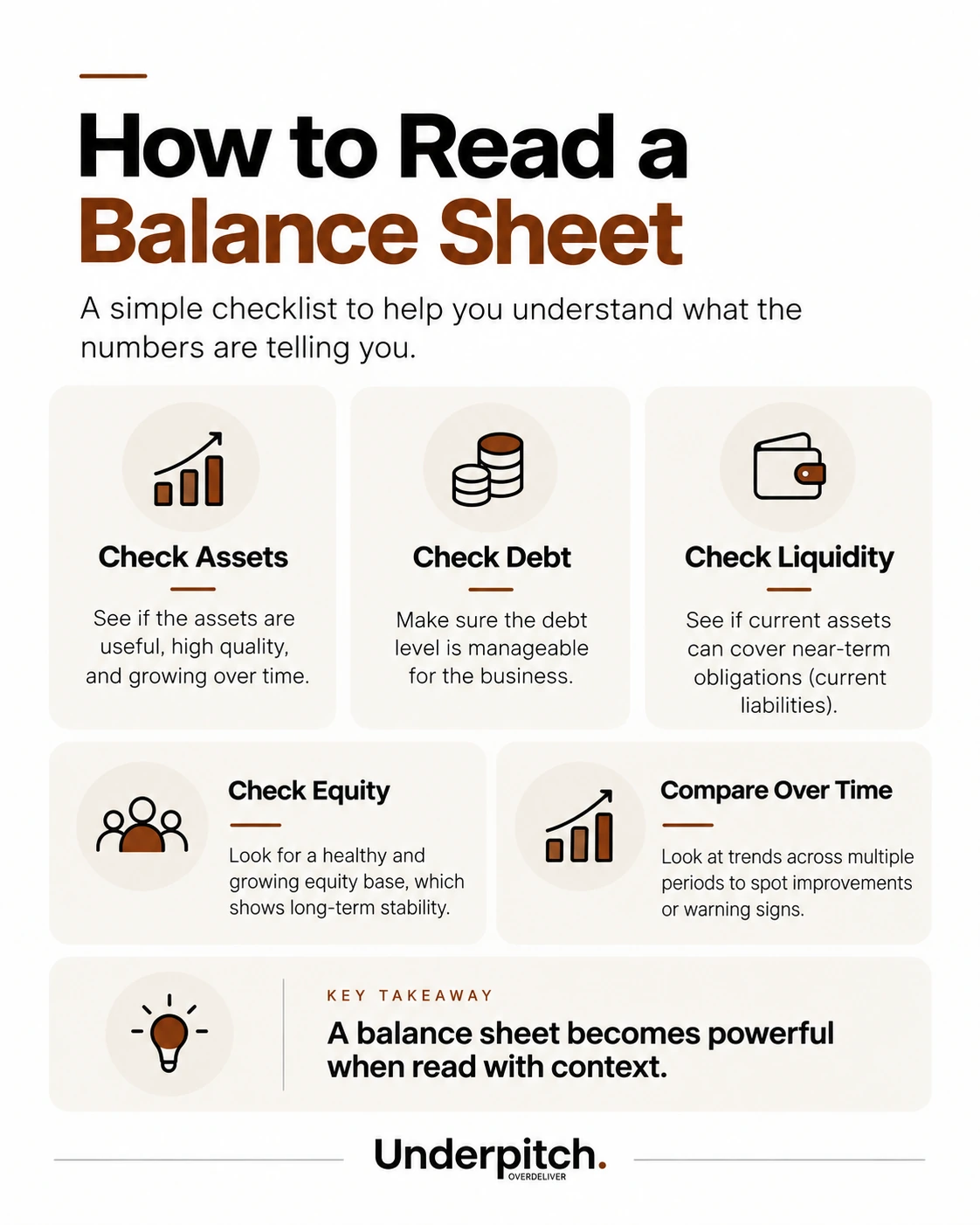
Balance sheet, in plain English
Assets, liabilities, shareholders’ equity, current vs non-current items, working capital, debt and the ratios investors use to judge financial strength.
What is a balance sheet?
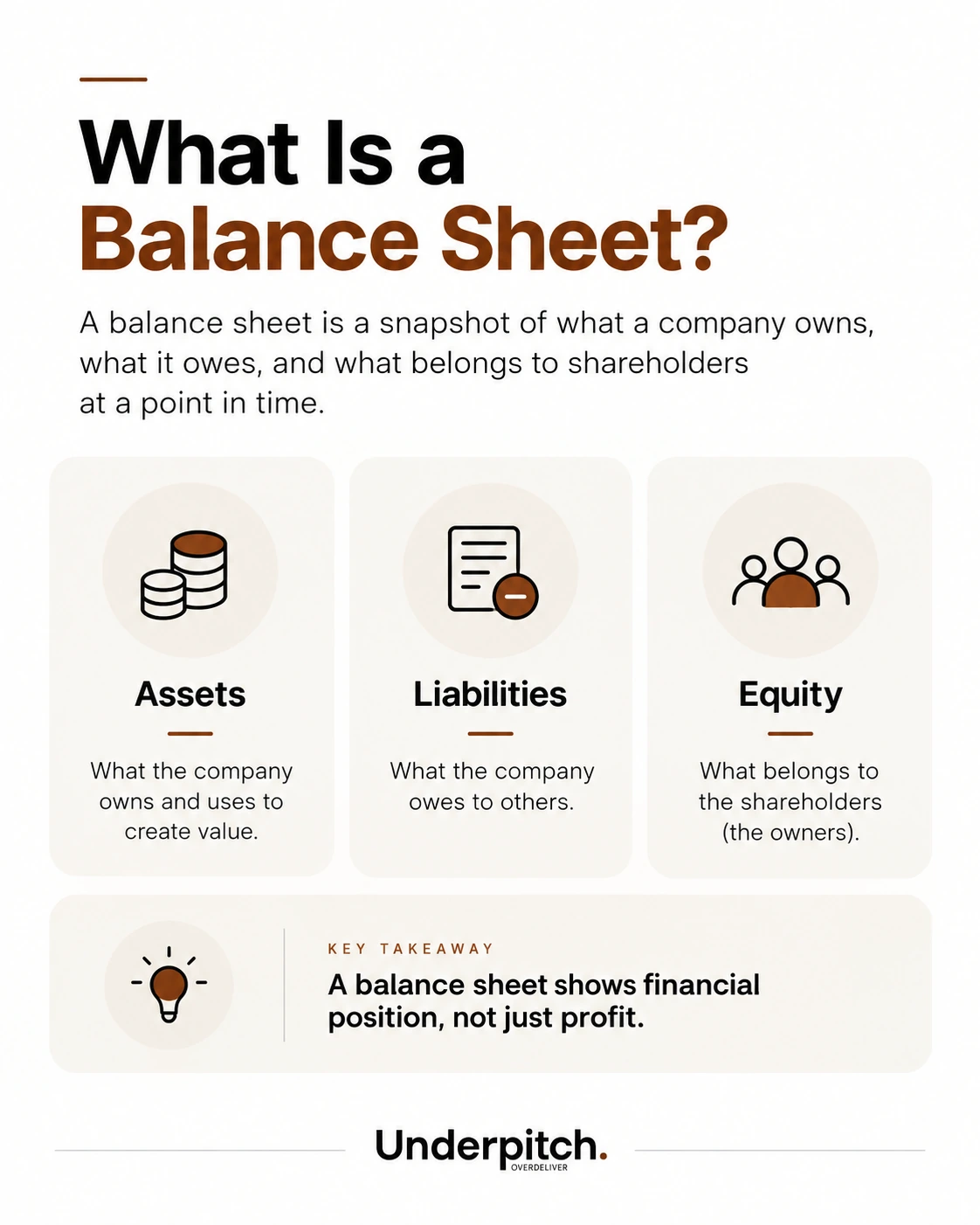
A balance sheet is a snapshot of what a company owns, what it owes, and the residual value attributable to shareholders at a particular date.
Assets = Liabilities + Shareholders’ Equity
Assets
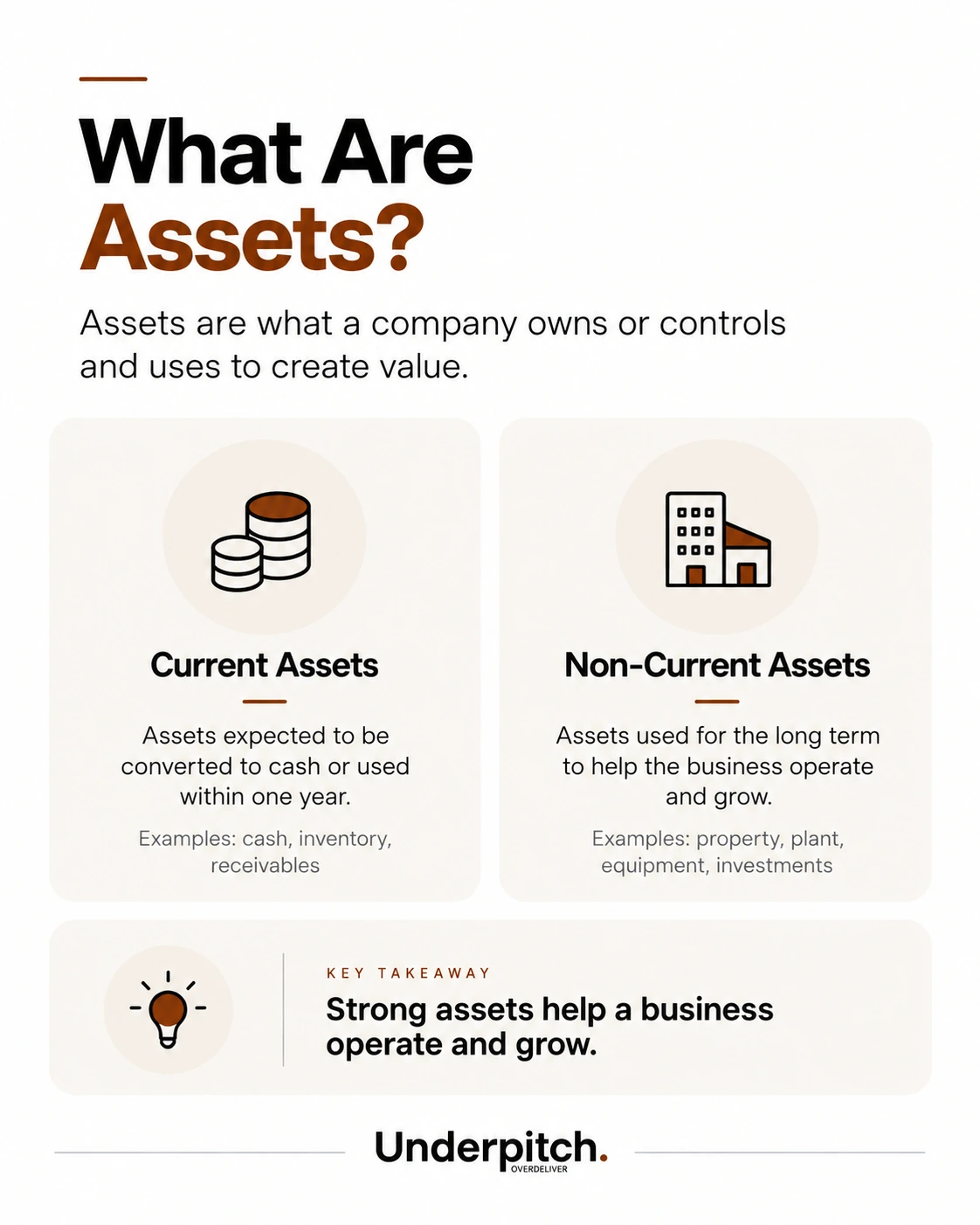
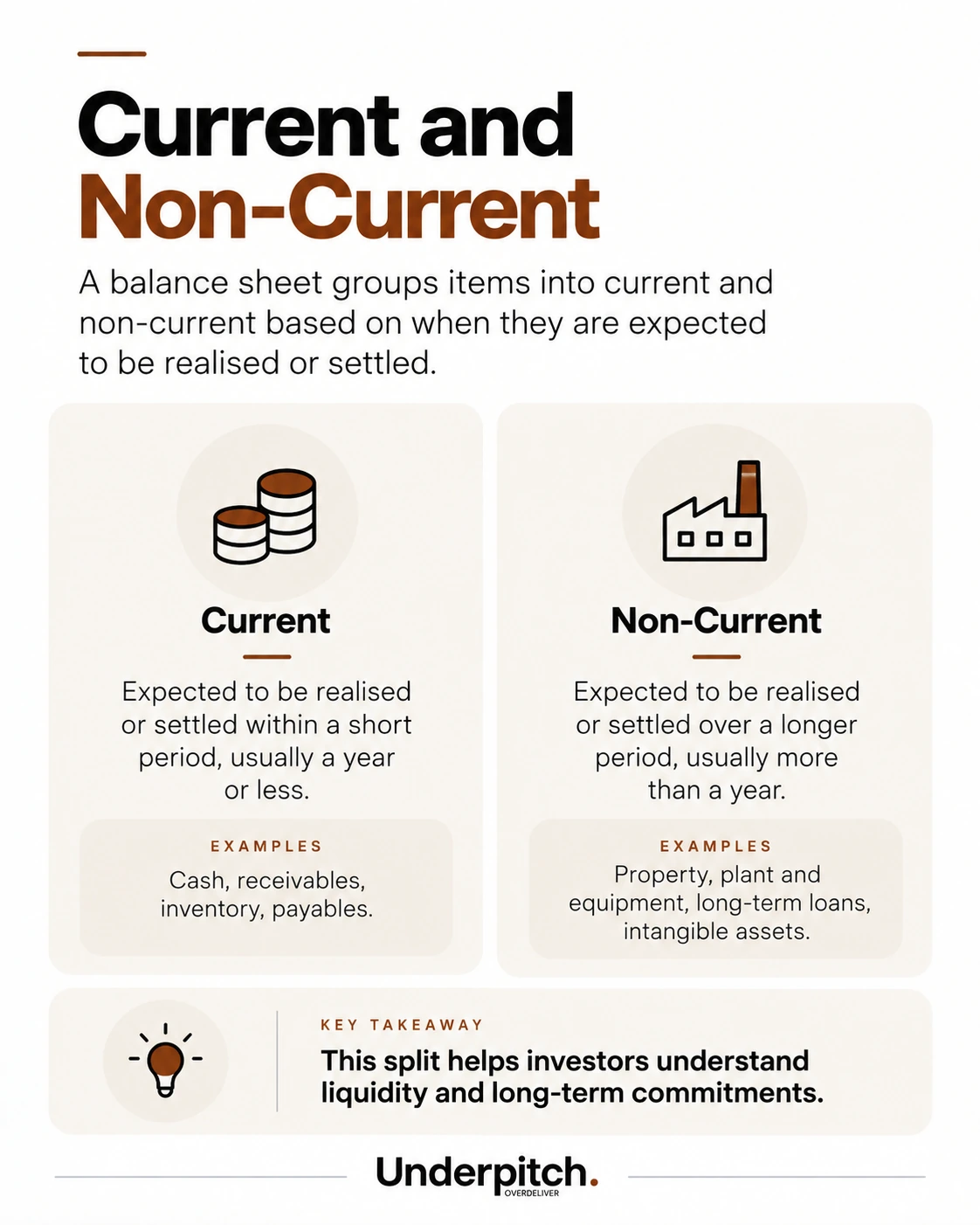
Assets are resources controlled by the company. Current assets are expected to turn into cash or be used within roughly a year: cash, receivables, inventory. Non-current assets include plant, property, equipment, long-term investments, goodwill and intangibles.
Liabilities
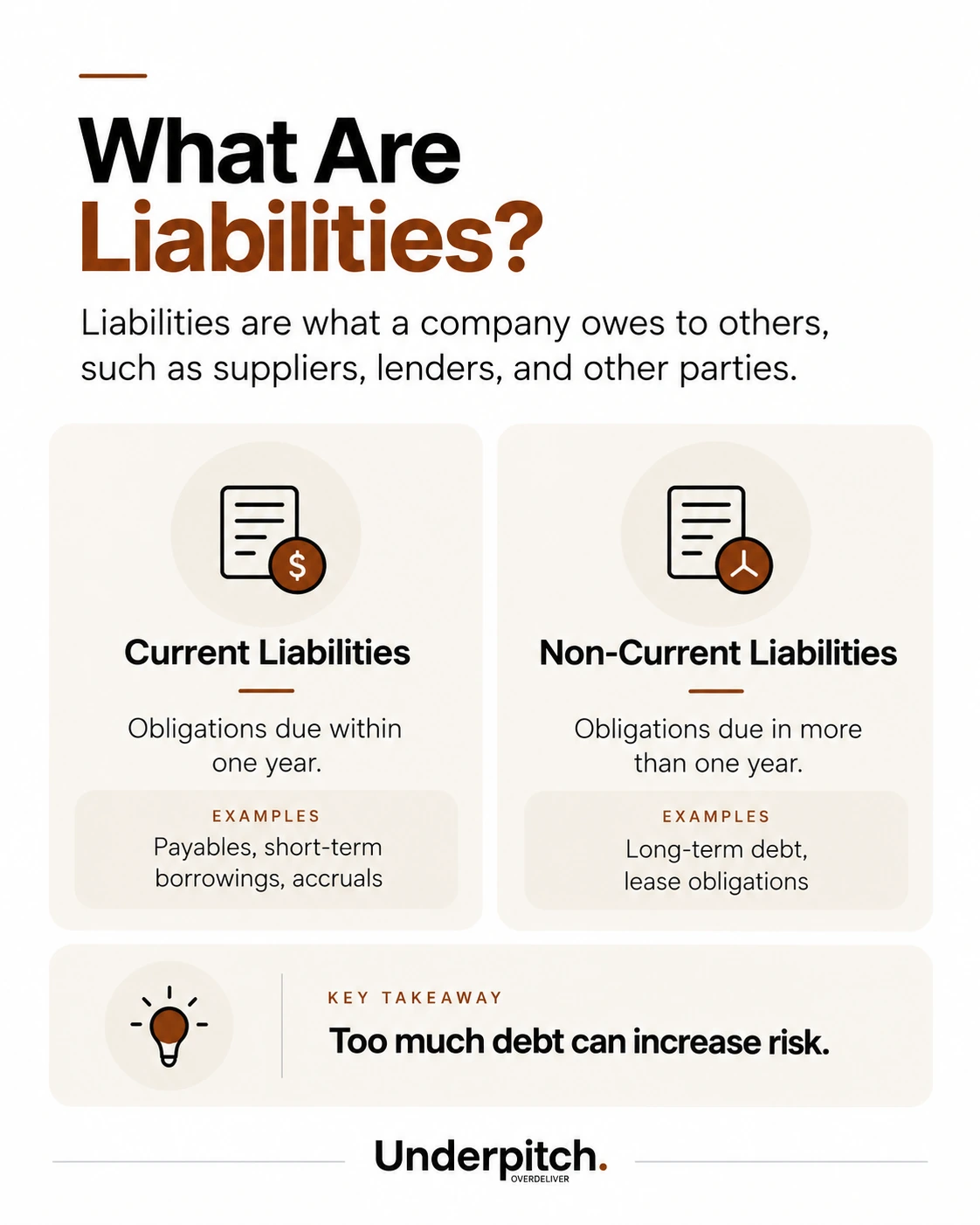
Liabilities are obligations. Current liabilities include trade payables, short-term borrowings and accrued expenses. Non-current liabilities include long-term debt, lease liabilities and some provisions. Debt is not always bad; the question is whether cash flows comfortably service it.
Shareholders’ equity
Equity typically includes share capital, securities premium, retained earnings and reserves, adjusted for accumulated losses or treasury items. It represents the accounting residual after liabilities are deducted from assets.
Working-capital example
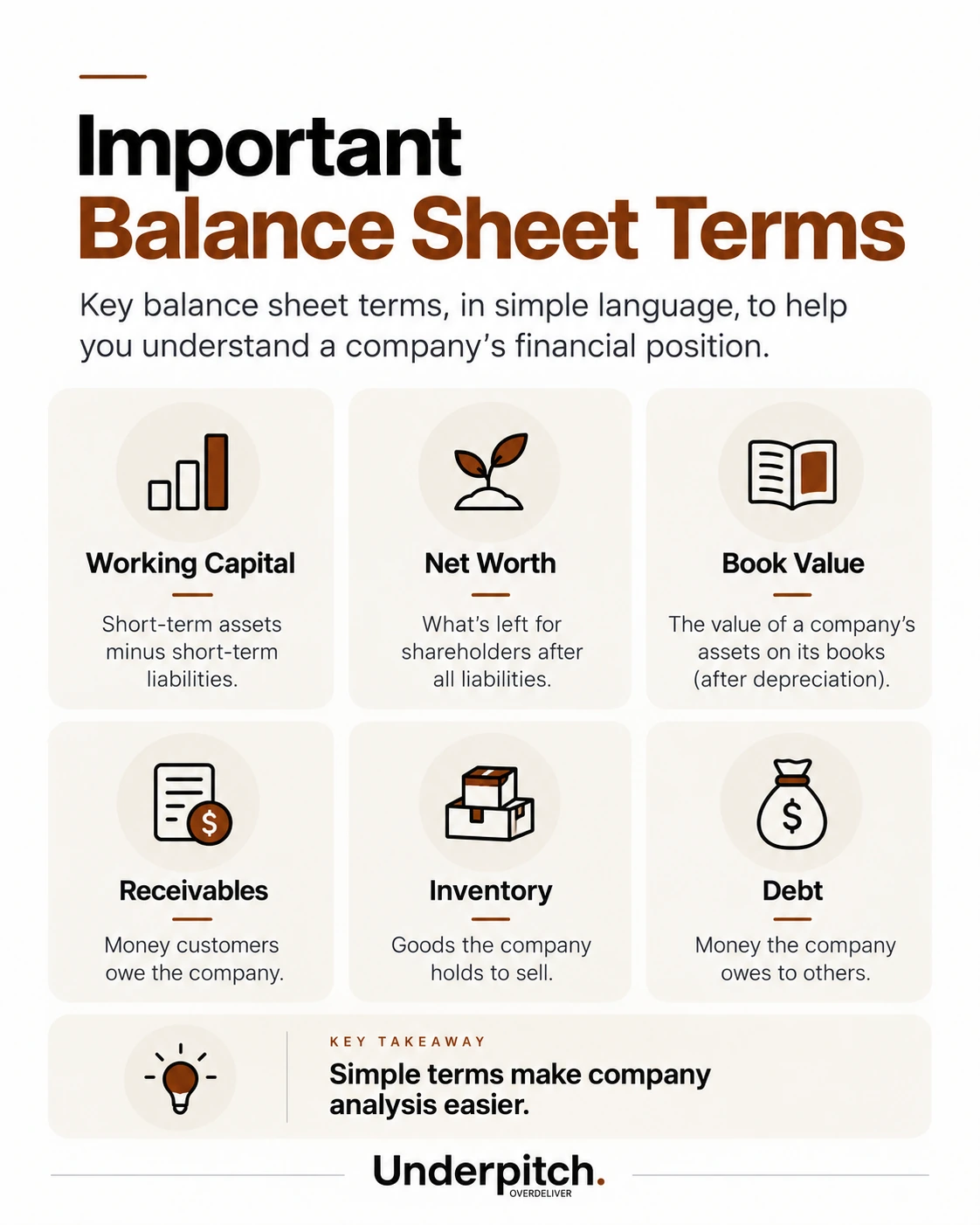
If current assets are ₹500 crore and current liabilities are ₹320 crore, working capital is ₹180 crore. Positive working capital can support operations, but “more is always better” is false — excess inventory or slow receivables may signal poor efficiency.
Key balance-sheet ratios
What to look for
- Debt growing faster than cash flow.
- Receivables rising much faster than sales.
- Inventory accumulation without matching demand.
- Large goodwill/intangibles after acquisitions.
- Frequent dilution or weak retained earnings.
- Compare several years and peers — one balance sheet rarely tells the full story.