
The role of SEBI
How SEBI regulates India’s securities market, protects investors, supervises intermediaries, supports transparency, conducts surveillance and handles grievances.
What is SEBI?
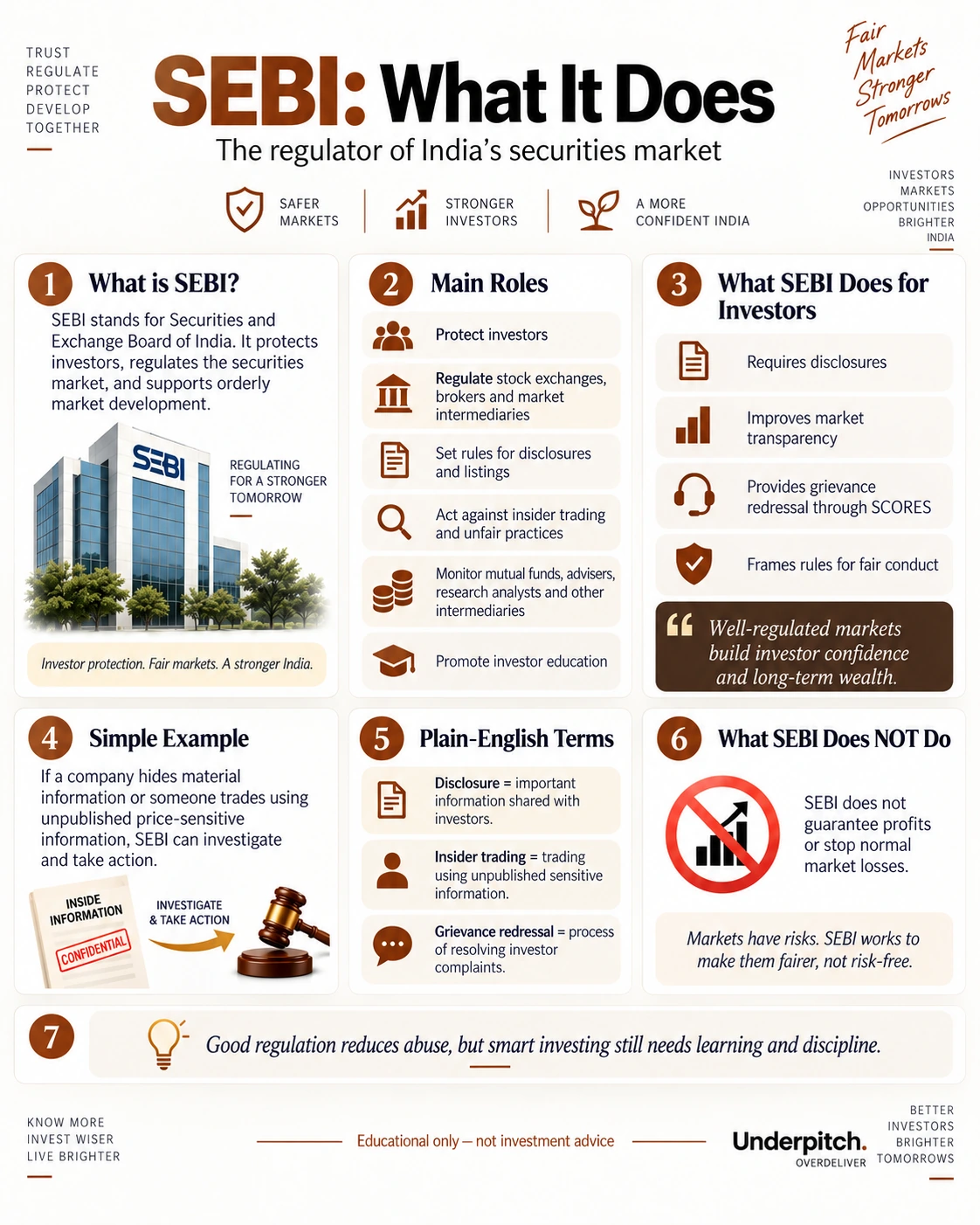
The Securities and Exchange Board of India is the statutory regulator of India’s securities market. Its core mandate is to protect investors, promote development of the securities market and regulate it.
Regulates market infrastructure
SEBI oversees recognized stock exchanges, clearing corporations, depositories and other market-infrastructure institutions so trading, clearing, settlement and custody operate under defined rules.
Registers and supervises intermediaries
Stock brokers, depository participants, merchant bankers, mutual-fund entities, investment advisers, research analysts, portfolio managers and other regulated intermediaries operate within SEBI frameworks. Investors should verify registration before dealing with a provider.
Investor protection and disclosure
SEBI creates disclosure standards, conduct rules and investor-right frameworks intended to reduce information asymmetry and unfair practices. It also publishes investor education material and warnings about scams, fake apps and unregistered entities.
Surveillance and enforcement
SEBI and market institutions monitor unusual activity and investigate potential violations such as insider trading, manipulation or fraudulent market conduct. SEBI can issue directions, impose penalties and take other action within its legal powers.
Complaints and dispute resolution
Investors should first approach the concerned regulated entity. If unresolved, complaints can be lodged through SEBI’s SCORES grievance system, and eligible disputes may use the securities-market Online Dispute Resolution mechanism.
What SEBI does not do
SEBI regulation does not mean a listed stock, IPO, mutual fund or other product is guaranteed to make money. Regulation aims for fair conduct, disclosure and market integrity; investors still bear market and investment risk.