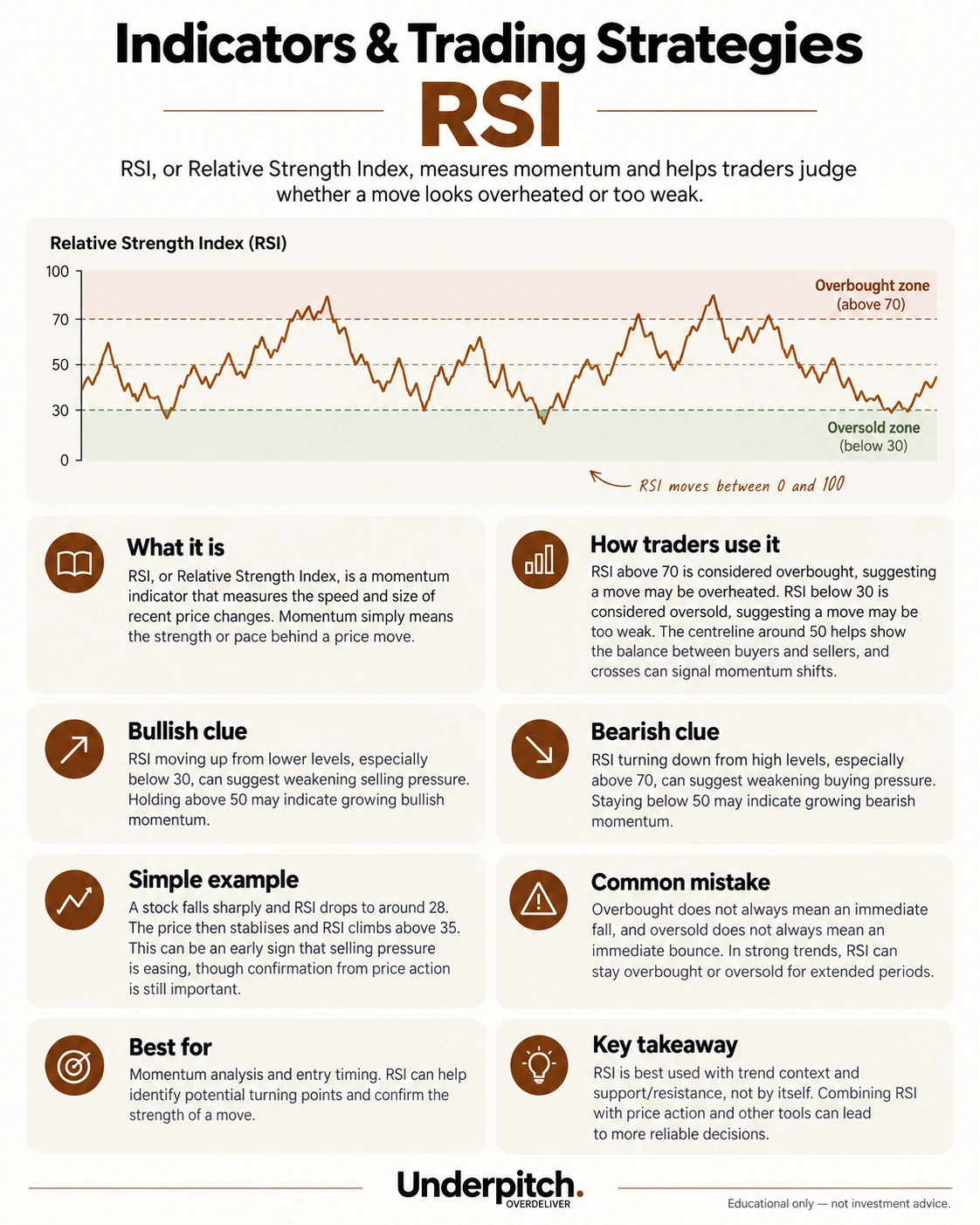
Indicators & trading strategies
Moving averages, RSI, MACD, Bollinger Bands, VWAP, support/resistance, breakouts, pullbacks, mean reversion and risk-management strategies.
Indicator rule: never use one line as certainty
Indicators transform historical price/volume data. They can support decisions, but they cannot remove market risk. Combine signal + market regime + price structure + volume + position sizing.
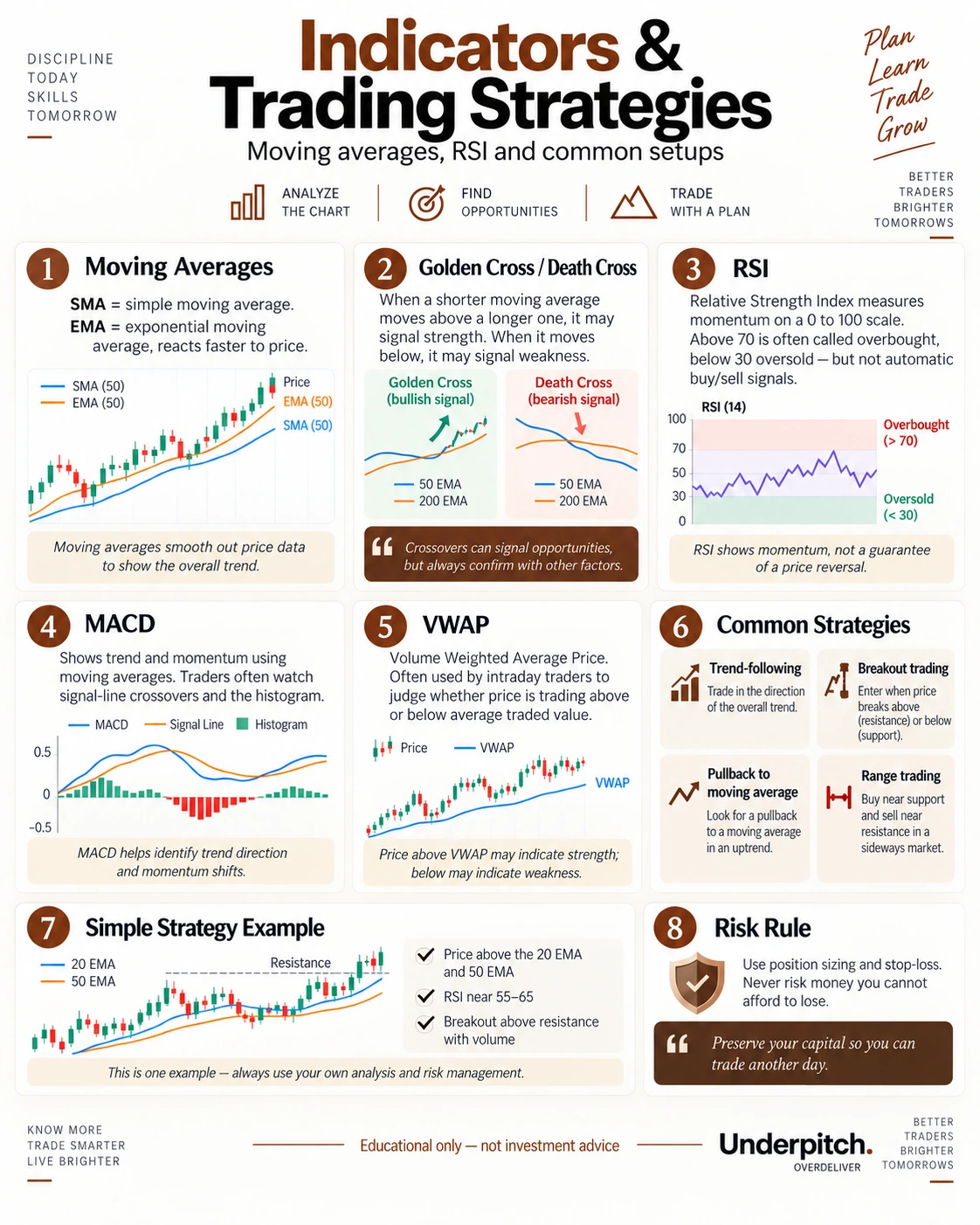
Moving averages
Smooth price data. SMA weights periods equally; EMA gives more weight to recent prices. Common uses: trend filter, dynamic support/resistance and crossovers. Weakness: lag and whipsaws in sideways markets.
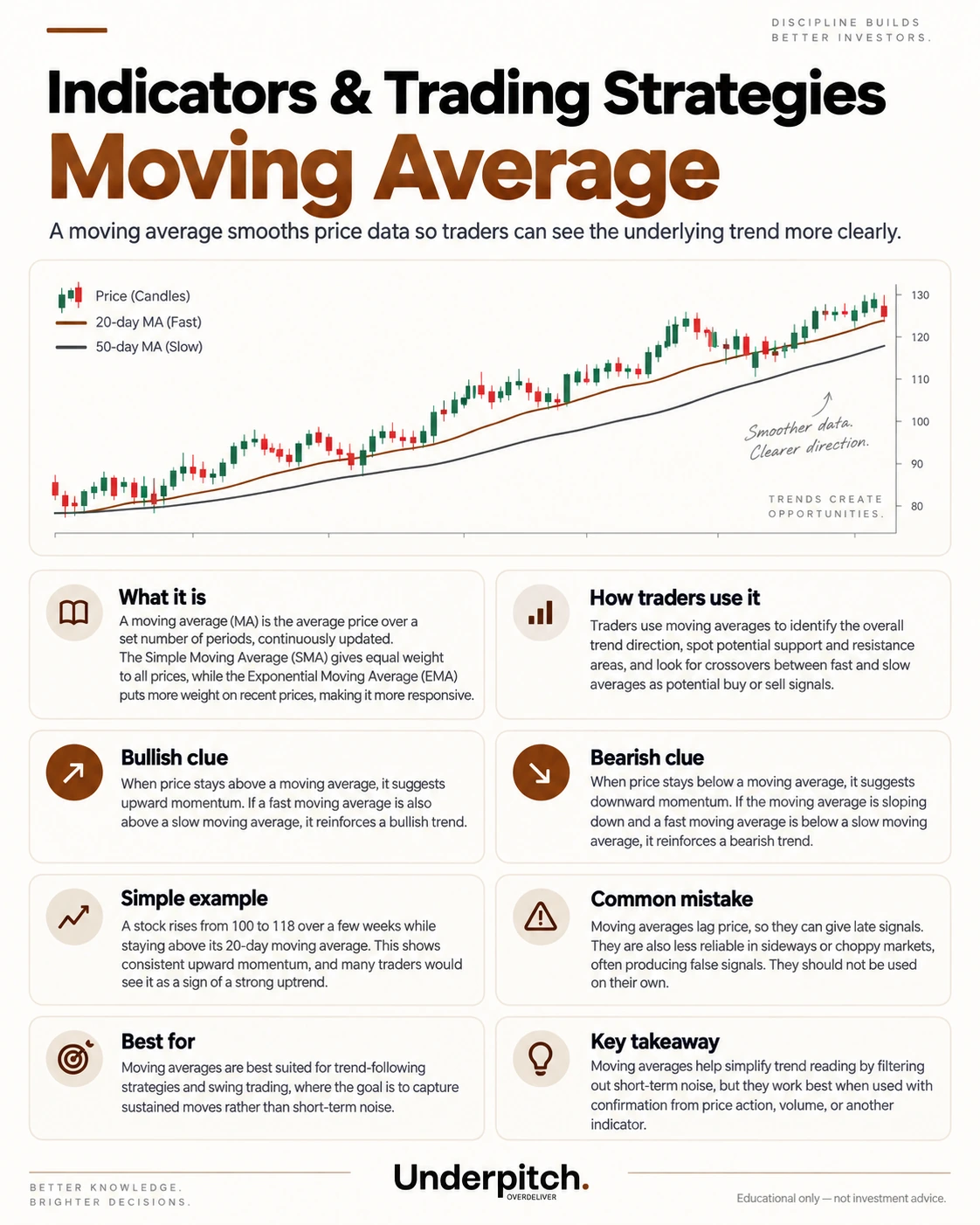
RSI
Relative Strength Index is a momentum oscillator from 0 to 100. 70/30 are common reference zones, but “overbought” does not automatically mean sell and “oversold” does not automatically mean buy.
MACD
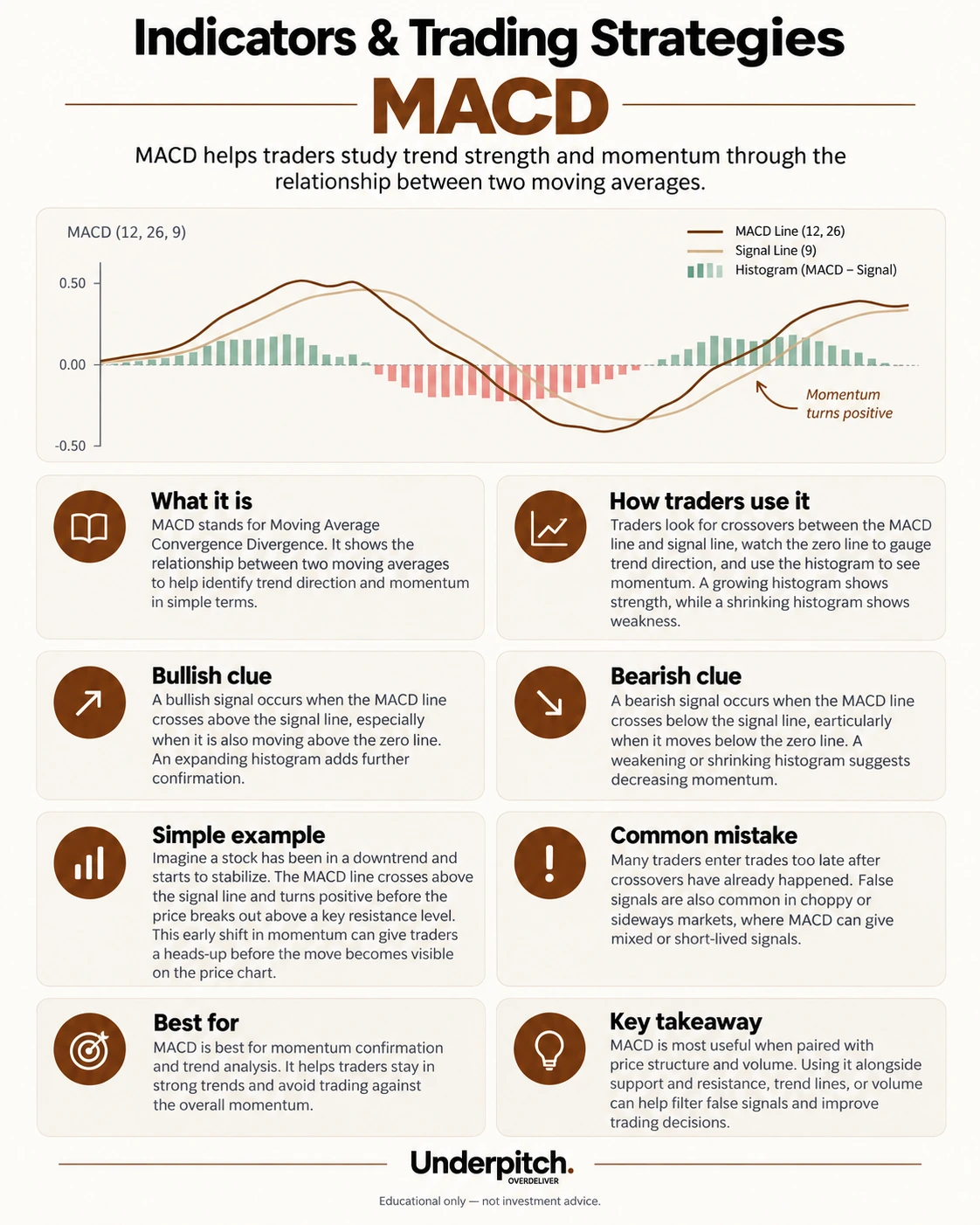
Uses relationships between exponential moving averages plus a signal line and histogram. Useful for trend/momentum shifts; lag and false crossovers are common in choppy markets.
Bollinger Bands
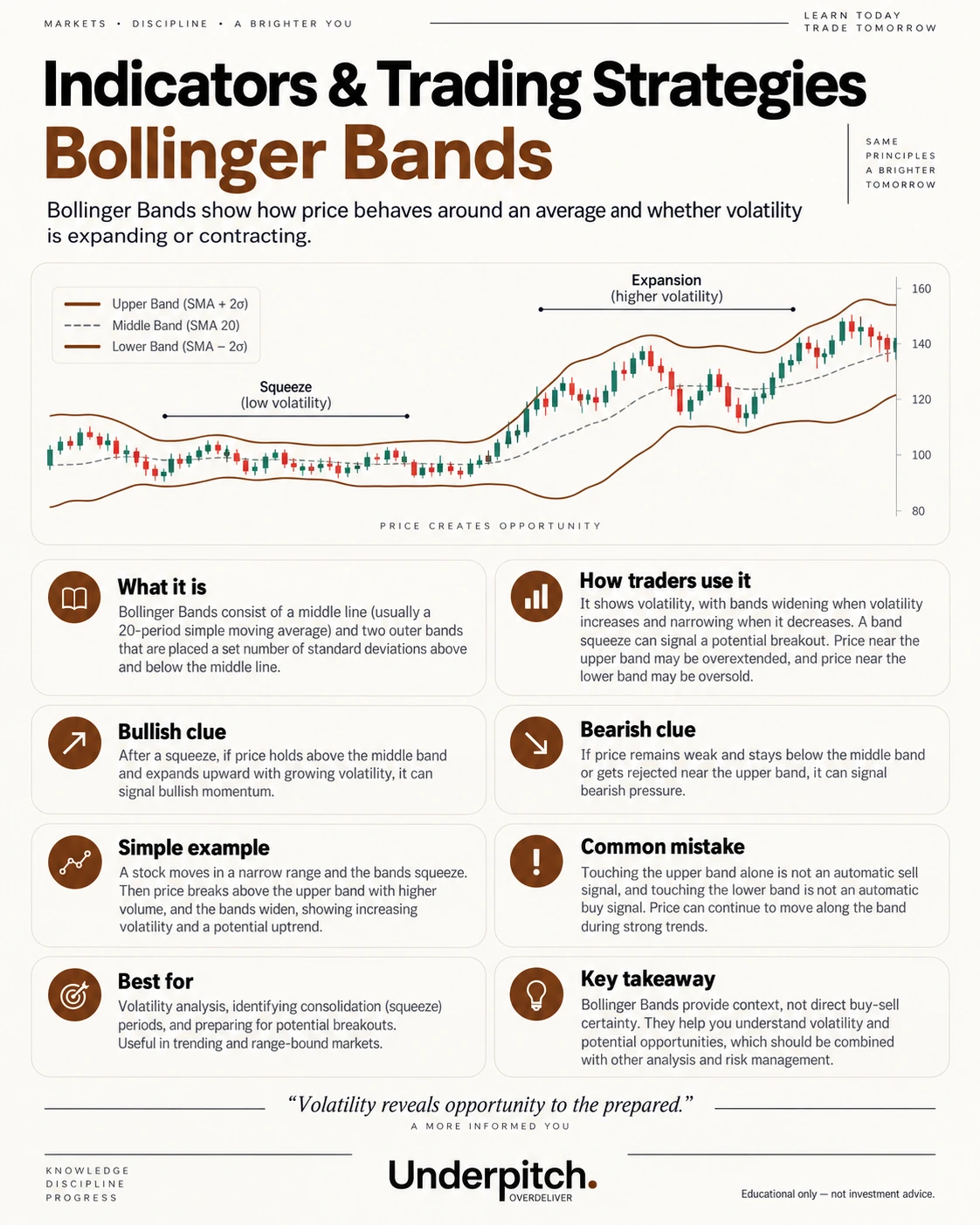
A moving average with volatility bands. Band contraction can show low volatility; expansion shows rising volatility. Touching a band is not a standalone signal.
Volume and VWAP
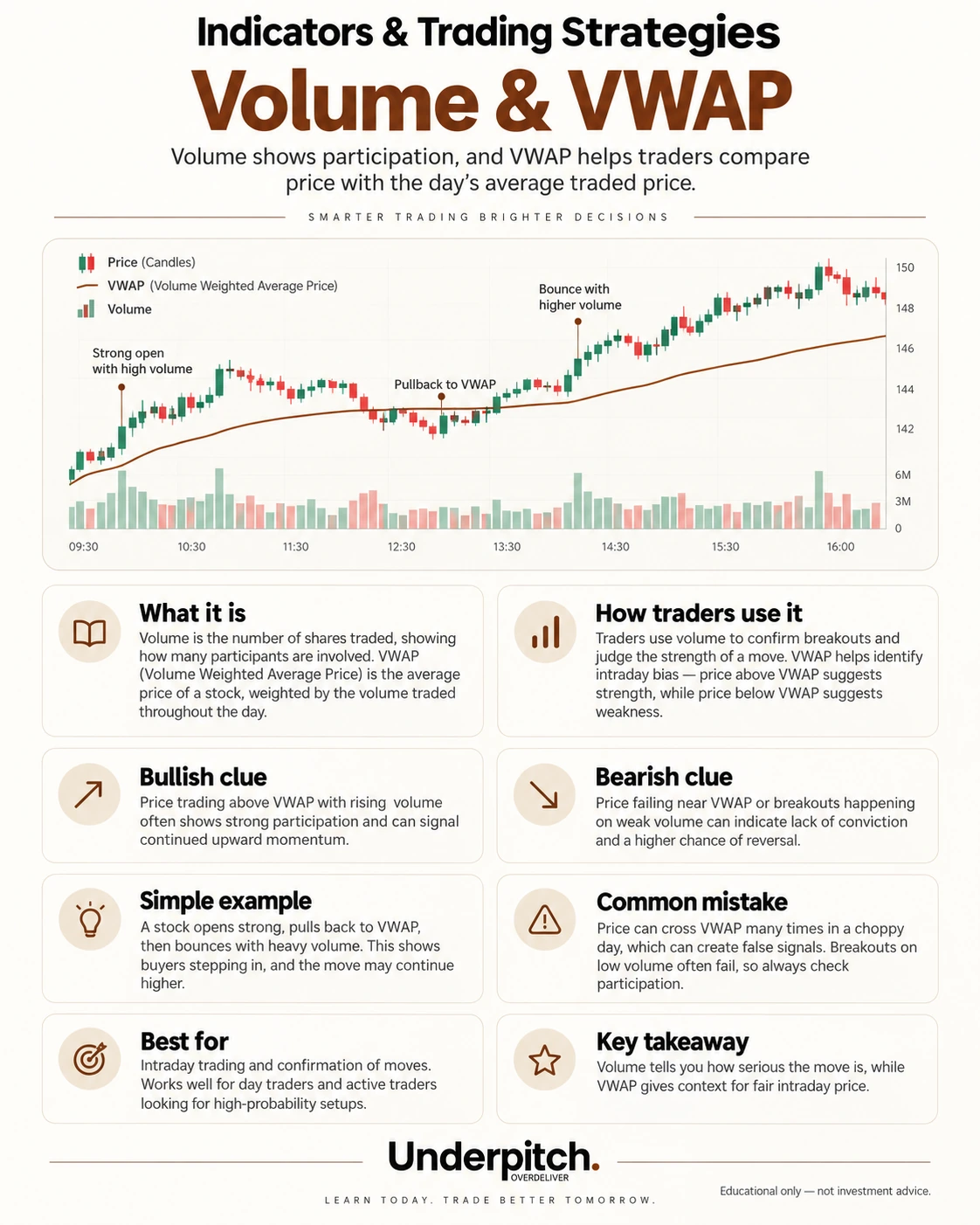
Volume confirms participation. VWAP is the day’s volume-weighted average traded price and is mostly an intraday reference. Price crossing VWAP repeatedly in a range can create false signals.
Support / resistance strategy
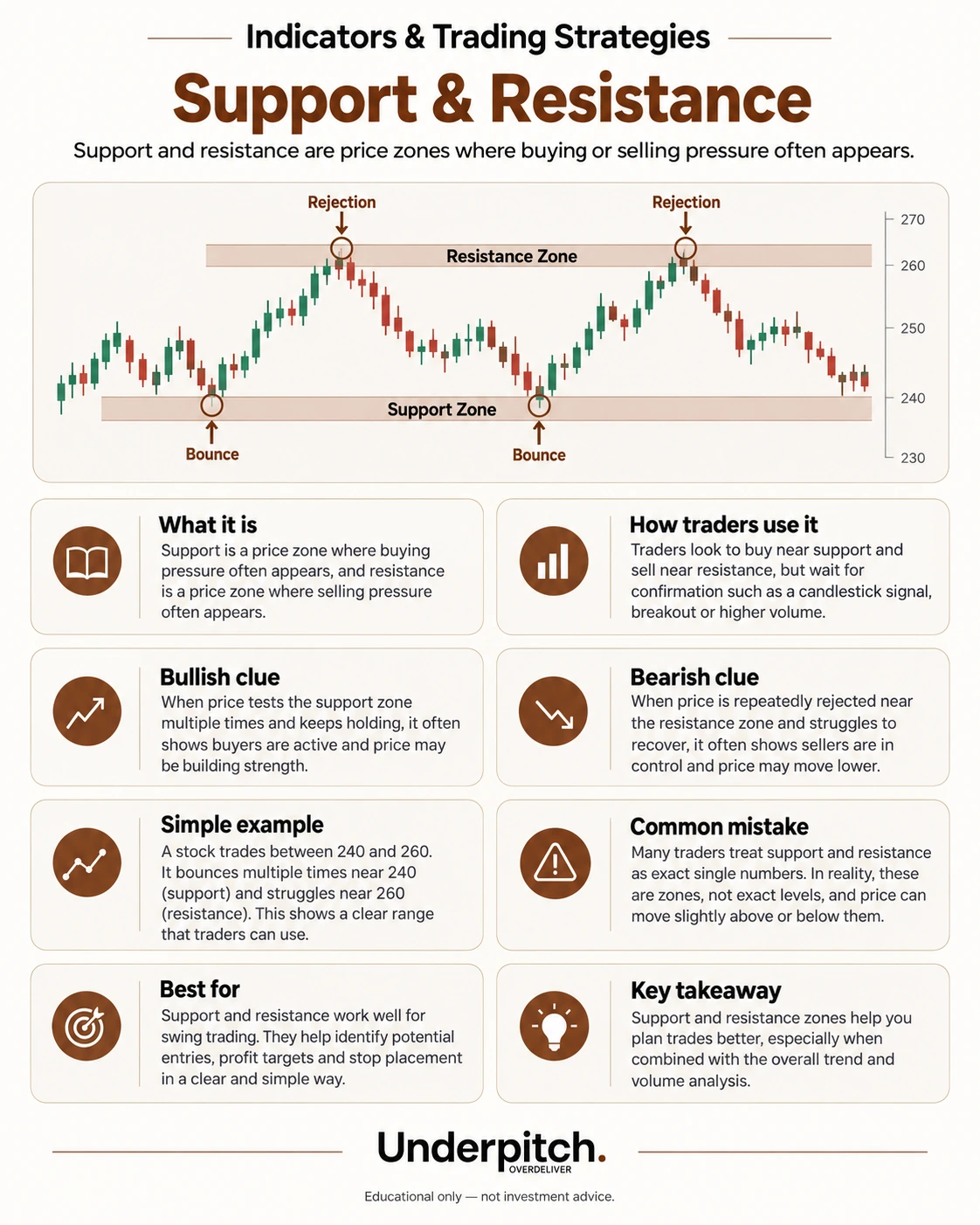
Look for reaction or breakout around important zones, but treat levels as areas and wait for evidence such as a strong close, retest or volume confirmation.
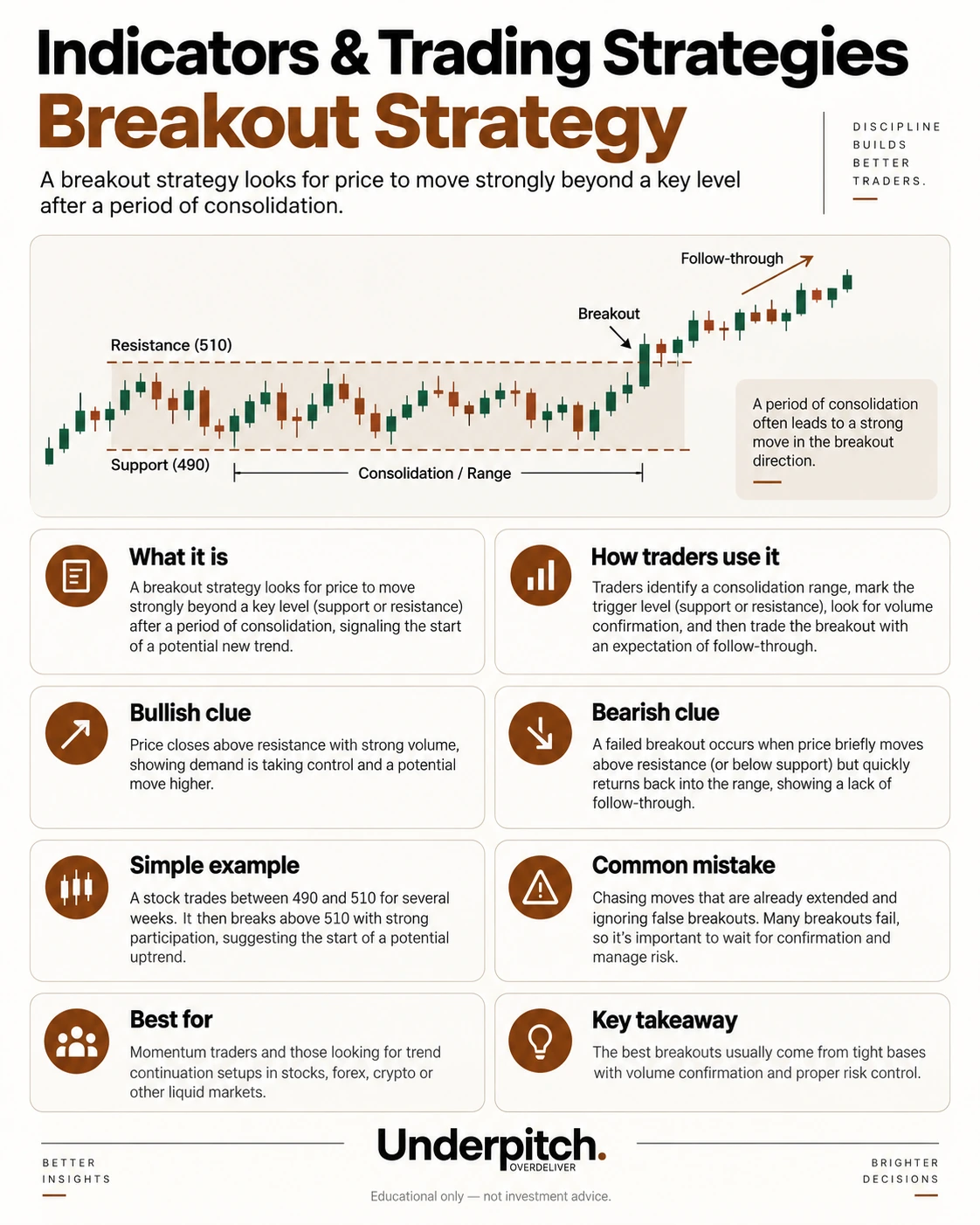
Breakout strategy
Identify a clear consolidation and trigger level, then require follow-through. False breakouts are common; chasing extended candles worsens risk/reward.
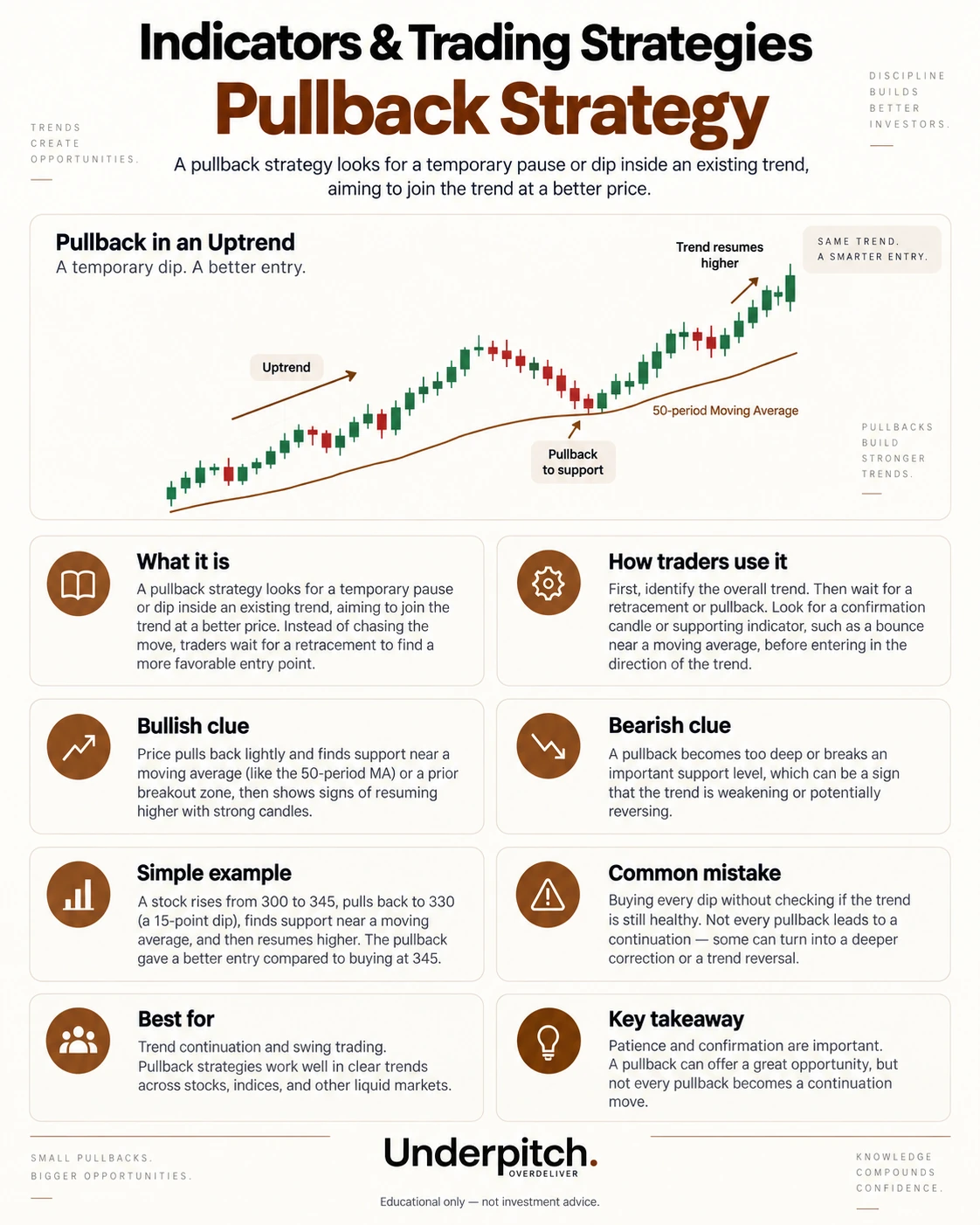
Pullback strategy
Join an existing trend after a controlled retracement toward support, prior breakout zone or moving average. A pullback can become a reversal, so invalidation matters.
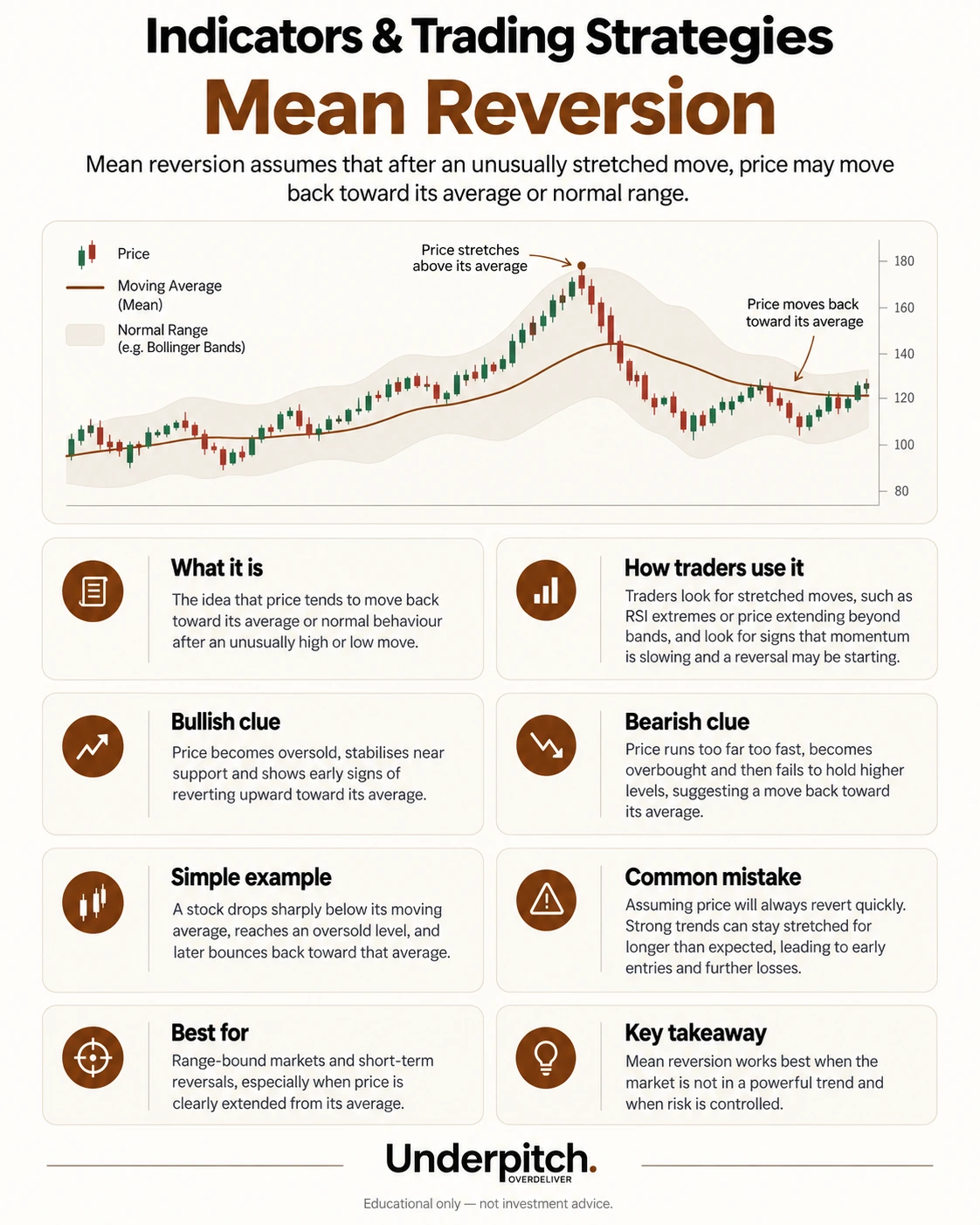
Mean reversion
Looks for unusually stretched price moving back toward a normal range or average. Works better in range-bound conditions; strong trends can stay stretched much longer than expected.
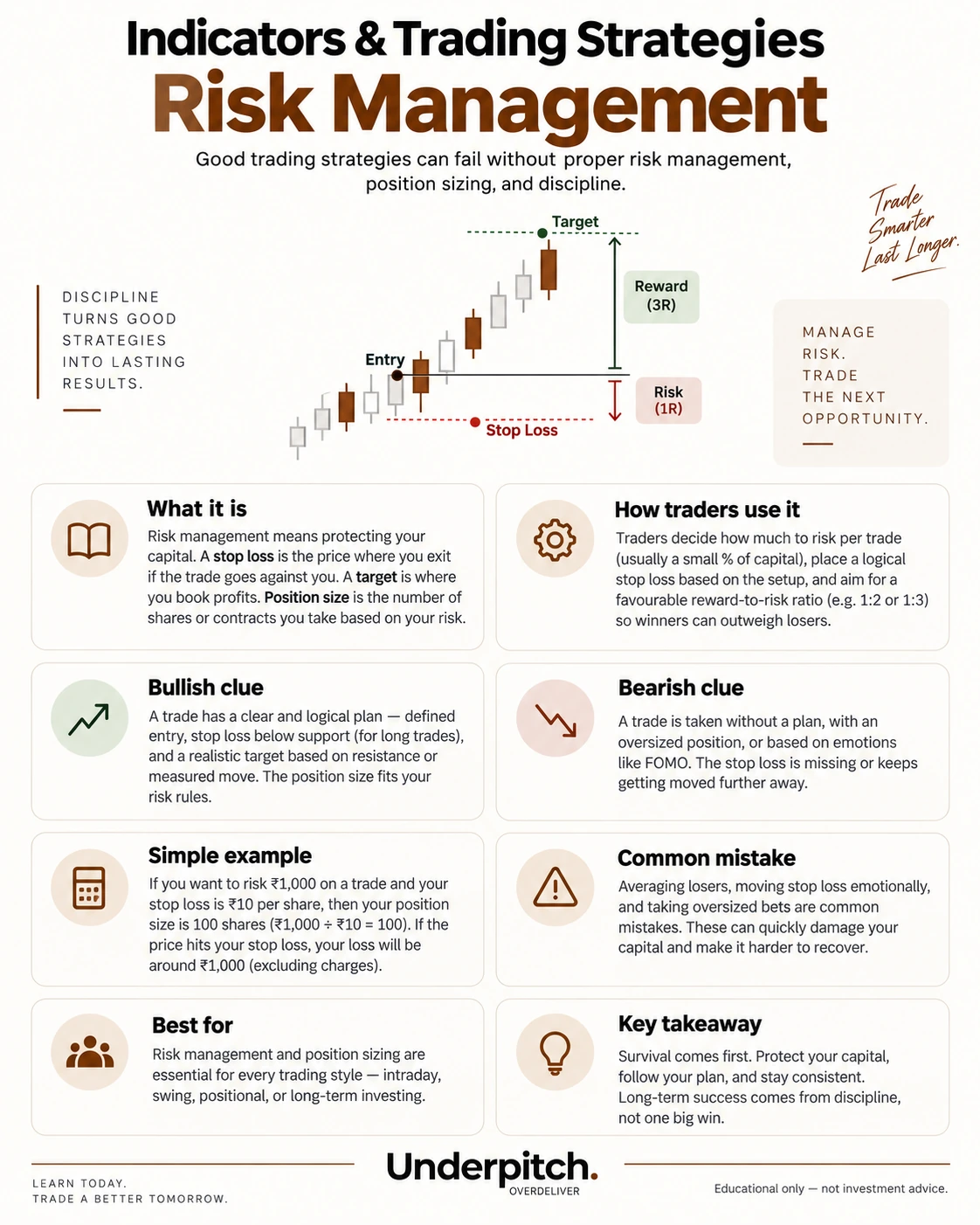
Risk management
Position size, stop logic and reward-to-risk determine whether a strategy survives losing streaks. Strategy signals without risk control are incomplete.