Taxation & charges in equity
Current Indian tax treatment for listed delivery shares, intraday, F&O and dividends, plus STT, market charges, loss set-off and simple examples.
Current India equity-tax snapshot
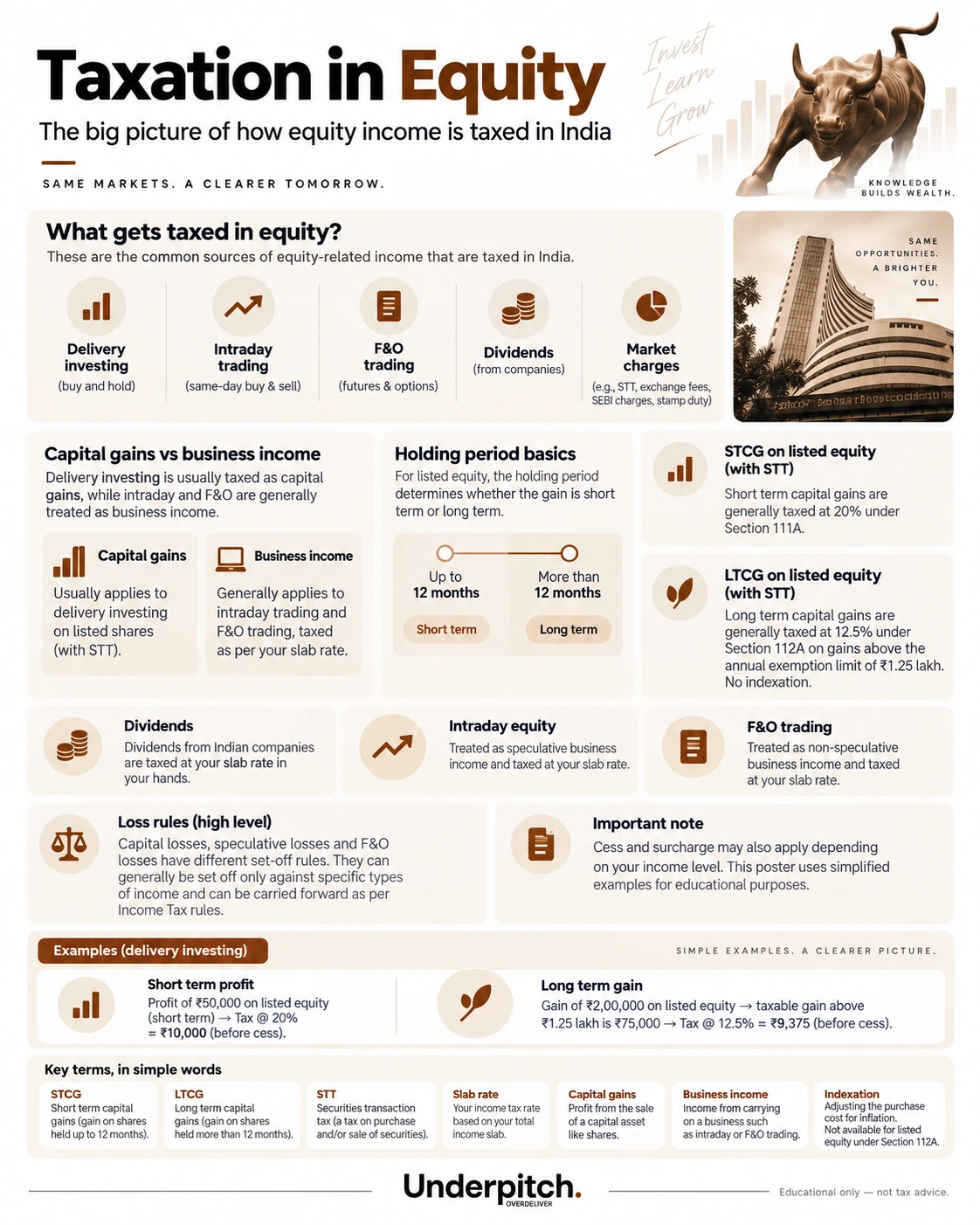
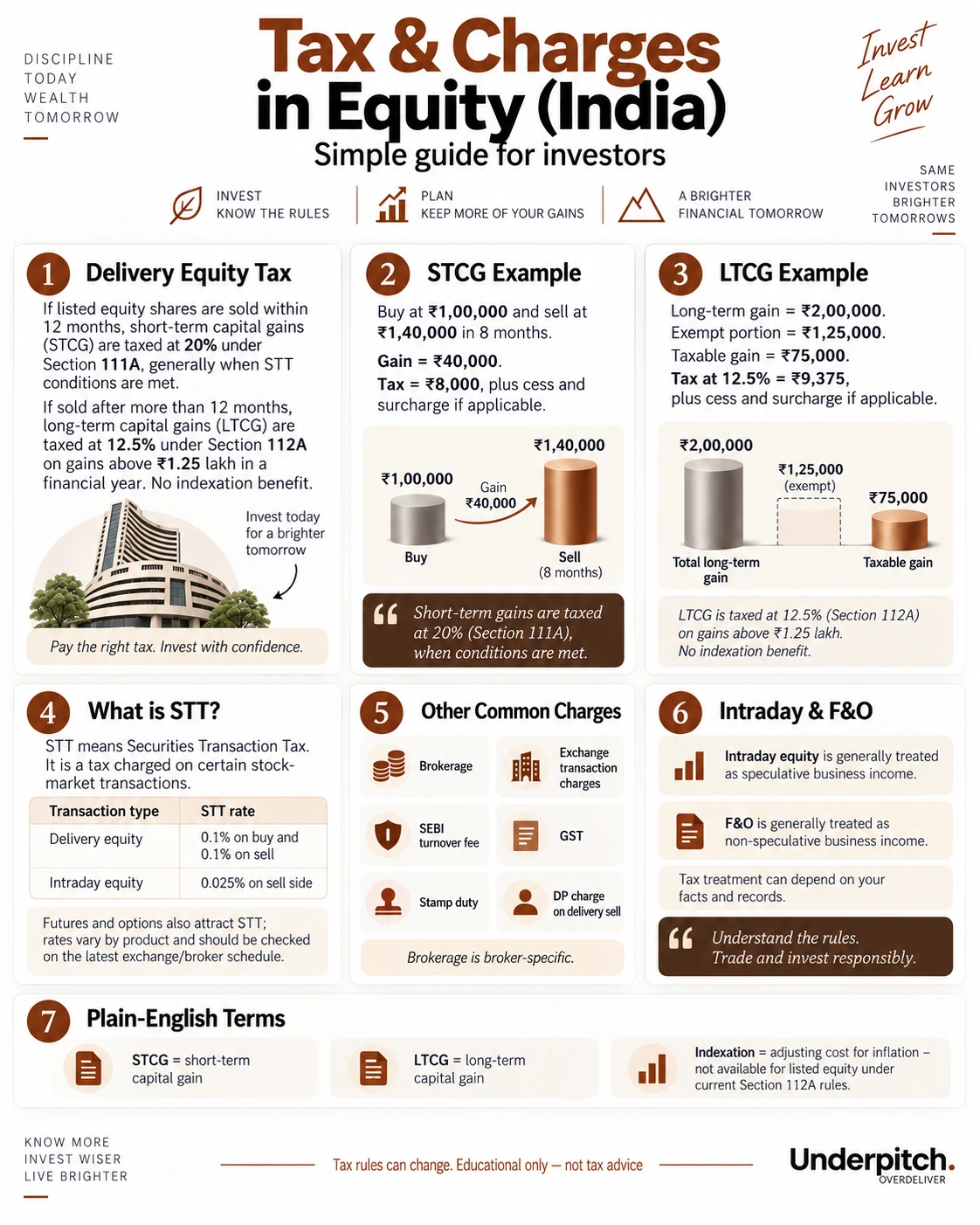
Reviewed 8 September 2026. For listed equity shares where the Section 111A/112A STT conditions are met: short-term capital gains are generally taxed at 20%; long-term gains after more than 12 months are generally taxed at 12.5% on aggregate eligible LTCG above ₹1.25 lakh in the financial year. Cess and surcharge can apply.
Tax depends on facts, taxpayer status, transaction type and law in force. Use this as education, not return-filing advice.
Holding period
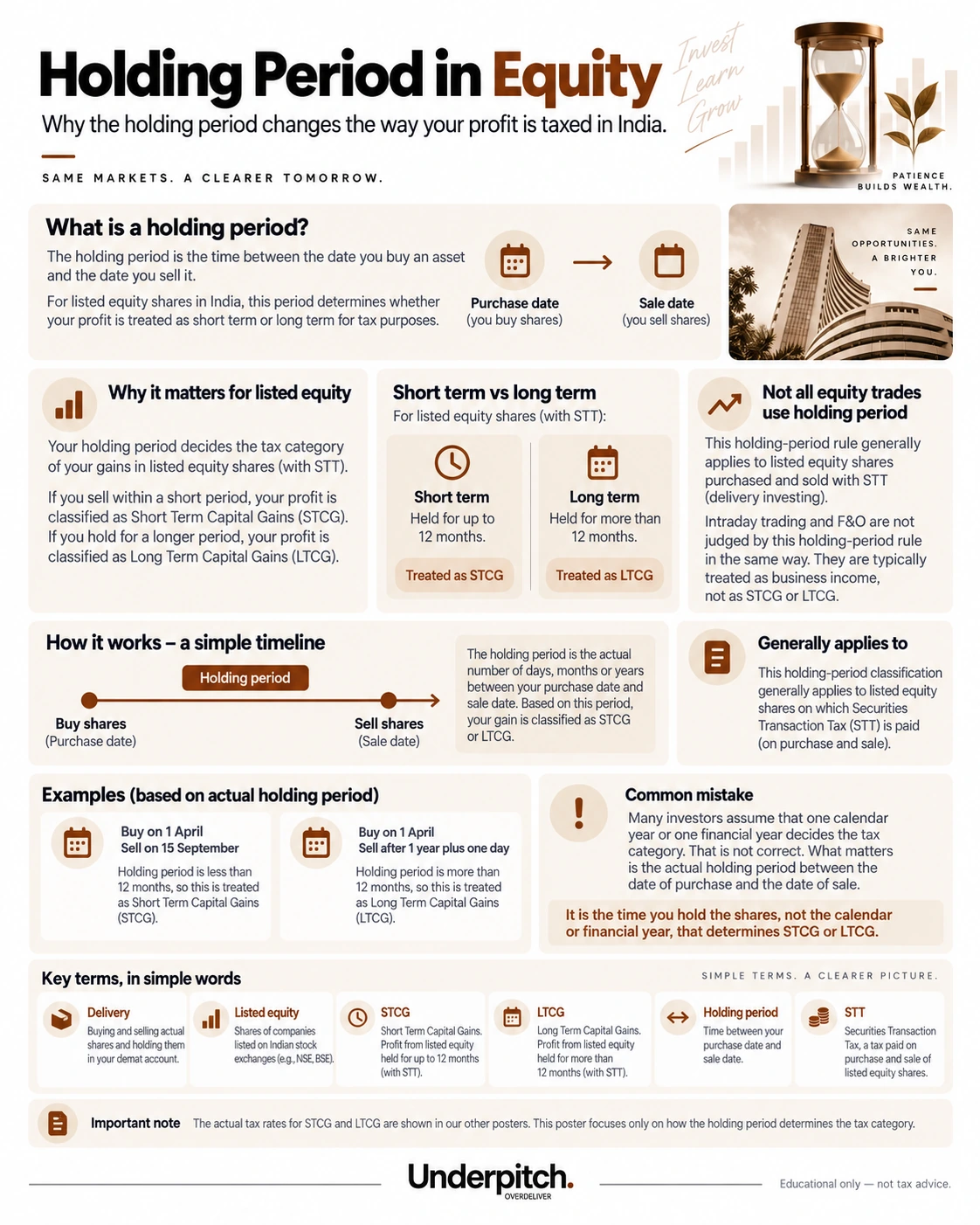
For listed equity shares, a holding period of 12 months or less is generally short-term; more than 12 months is long-term. The classification matters because the tax rate changes.
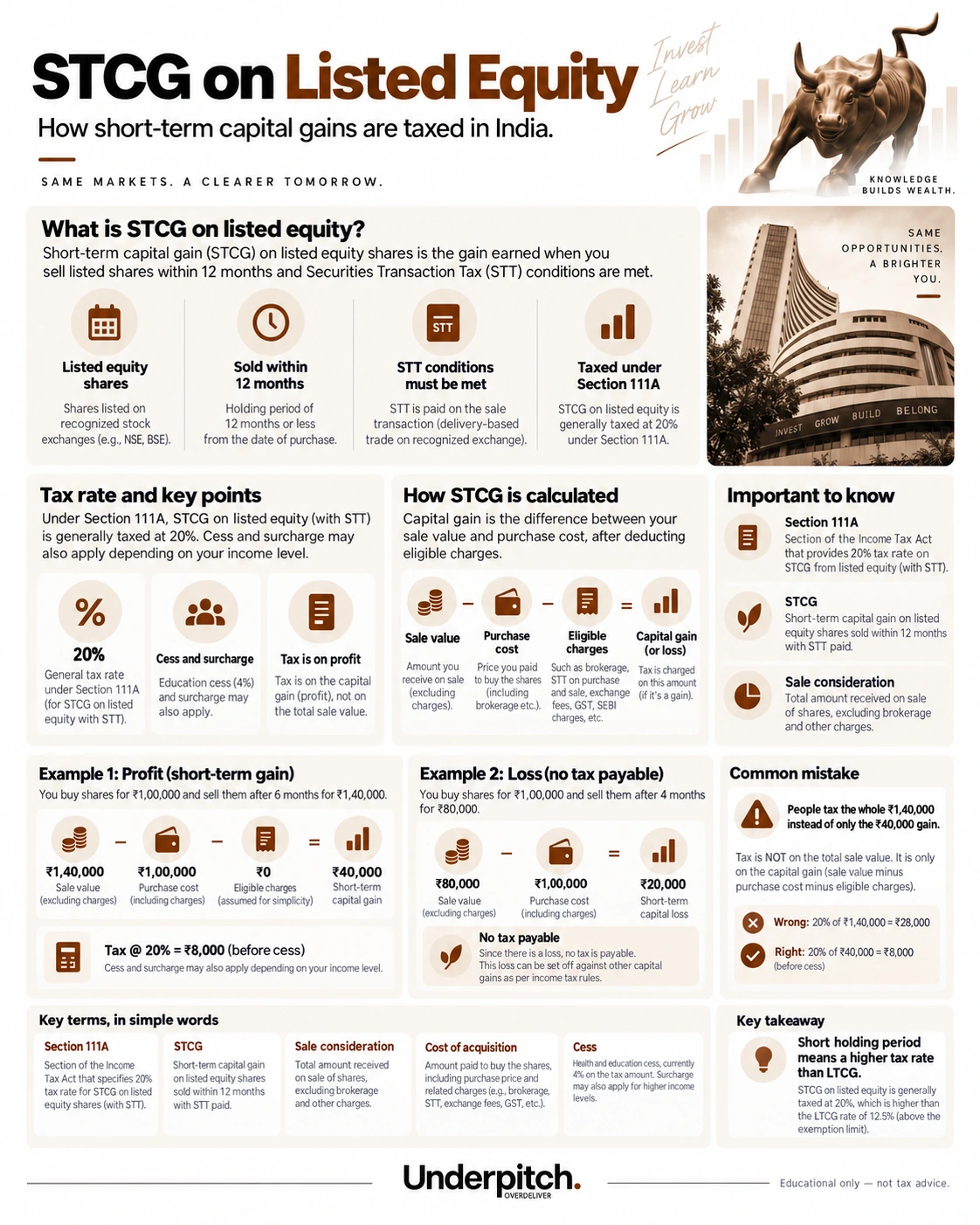
STCG example — listed equity
You buy shares for ₹1,00,000 and sell six months later for ₹1,40,000. Ignoring eligible transaction costs, the short-term gain is ₹40,000. At 20%, tax is ₹8,000 before cess/surcharge.
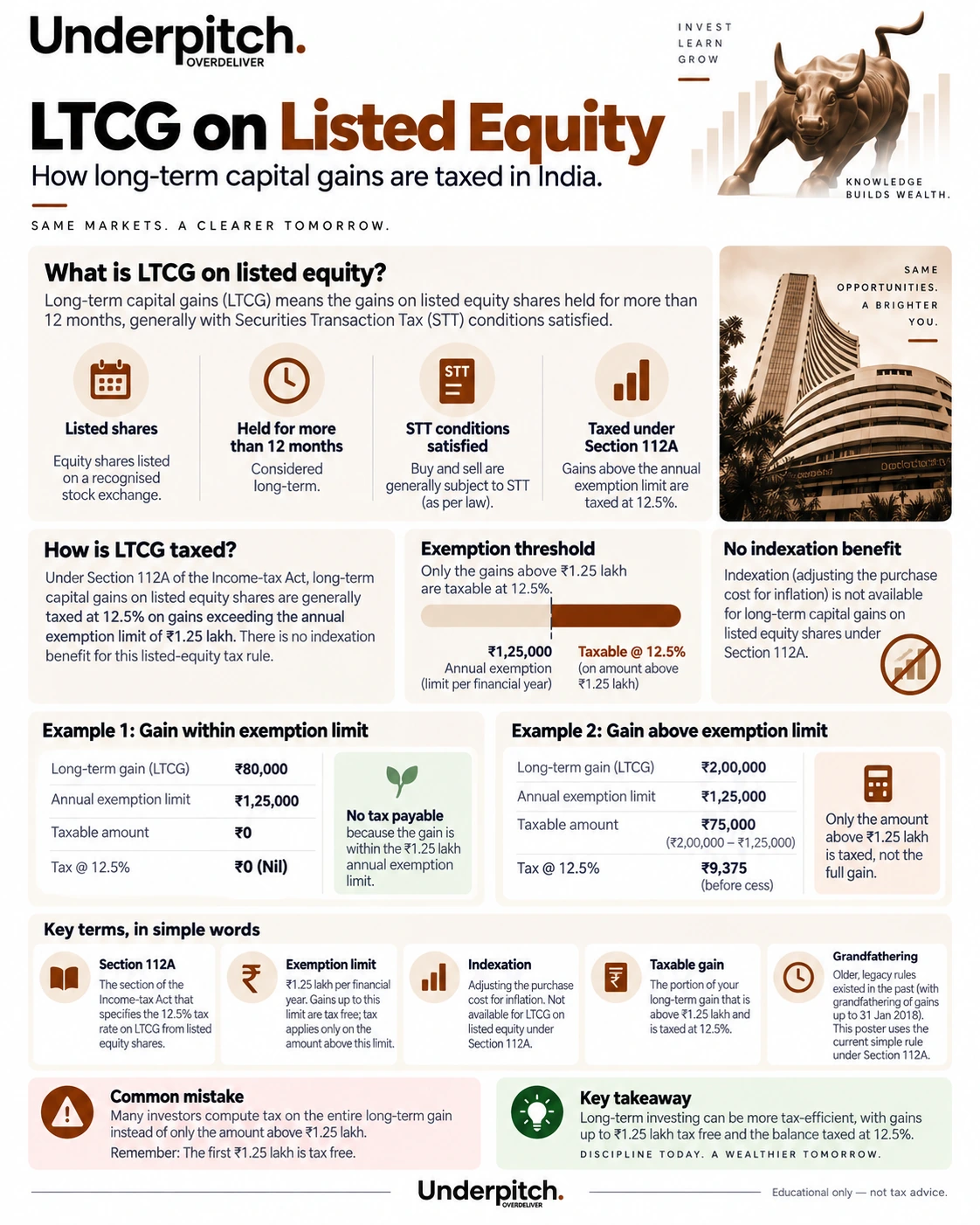
LTCG example — listed equity
Your aggregate eligible long-term gain for the financial year is ₹2,00,000. The first ₹1,25,000 is within the Section 112A annual exemption threshold, leaving ₹75,000 taxable. At 12.5%, tax is ₹9,375 before cess/surcharge.
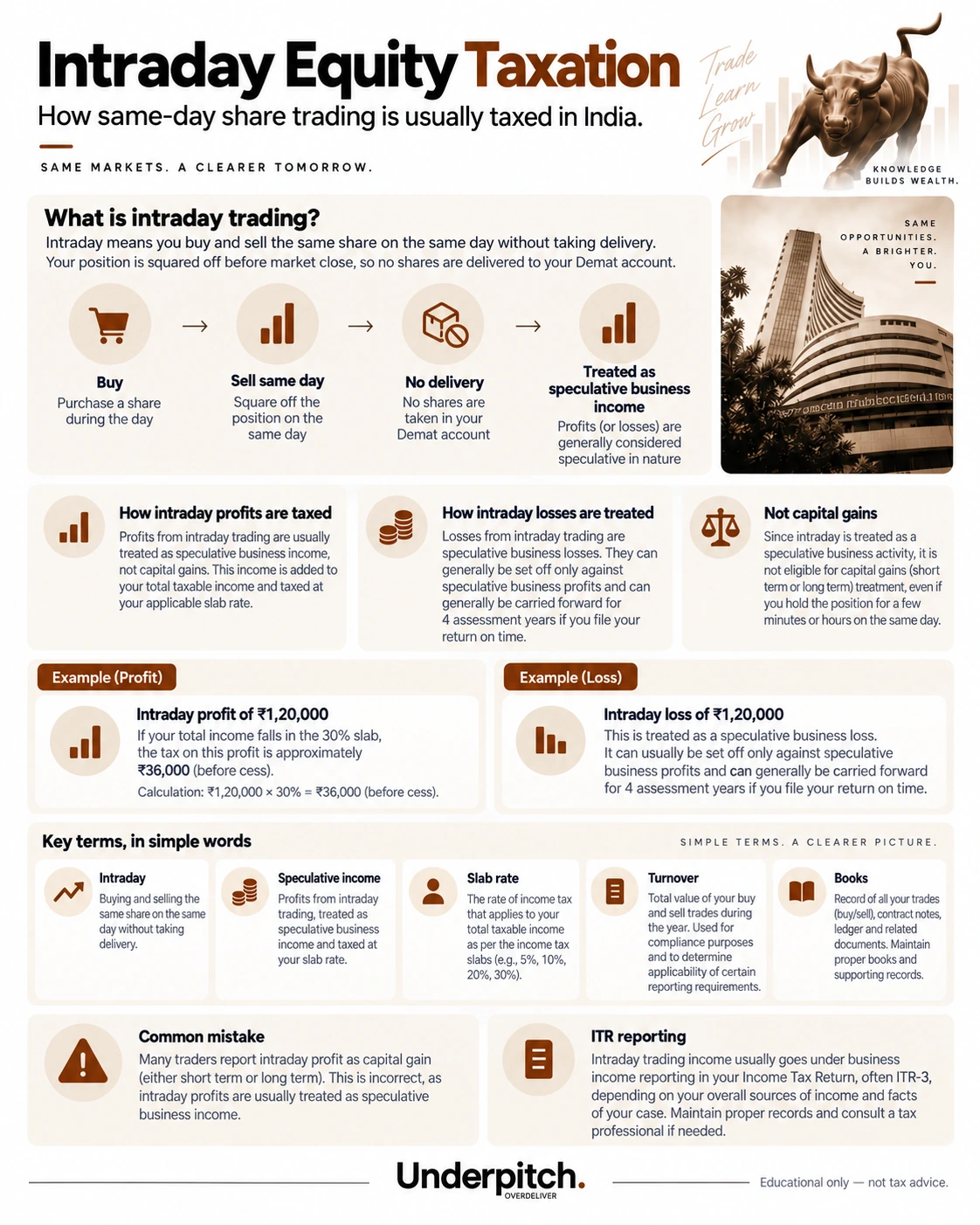
Intraday equity
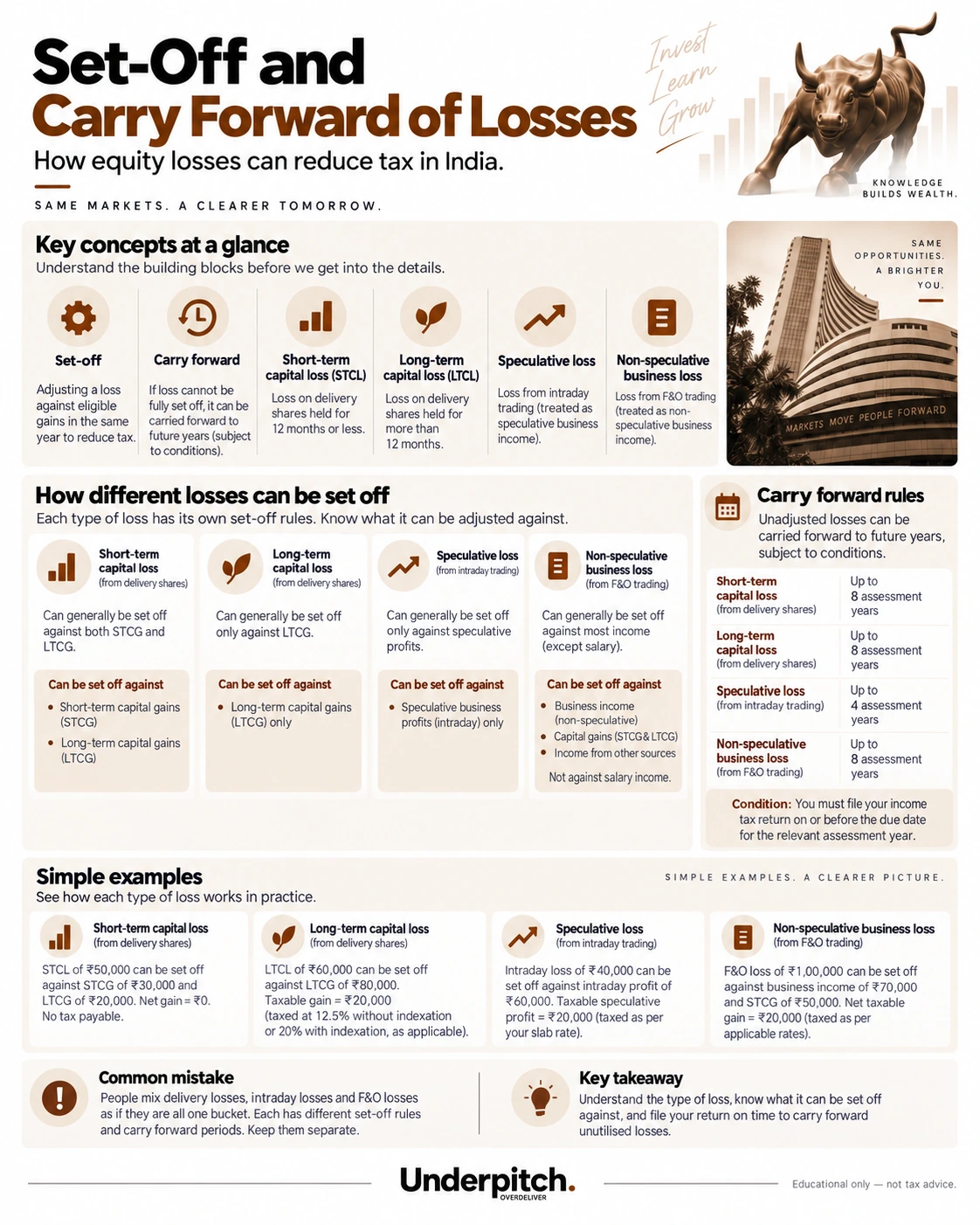
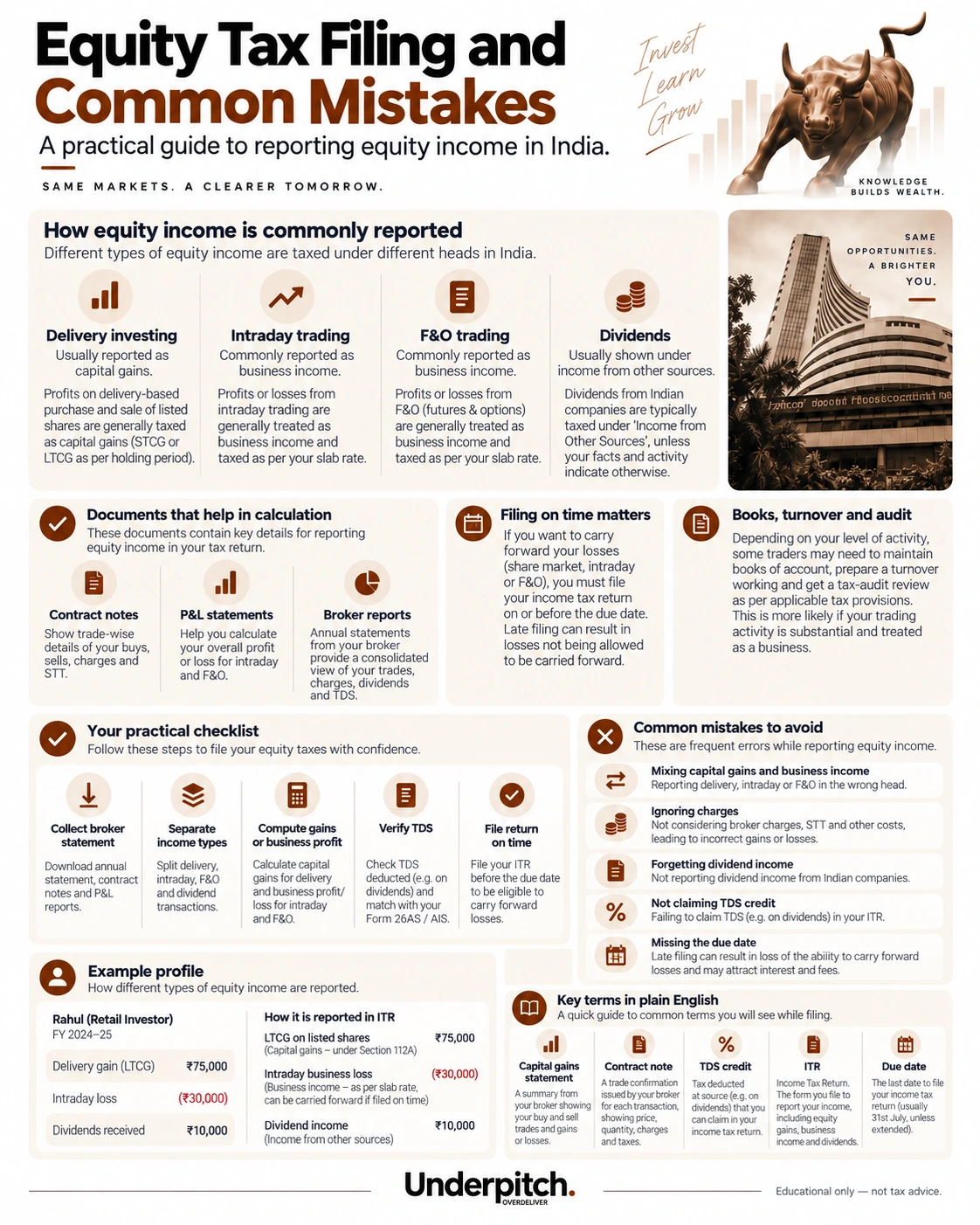
Same-day equity trading without delivery is generally treated as speculative business income, not capital gains. Profit is taxed under the applicable business-income/slab rules. Speculative losses are generally set off only against speculative profits and may be carried forward for up to 4 assessment years if conditions, including timely filing, are met.
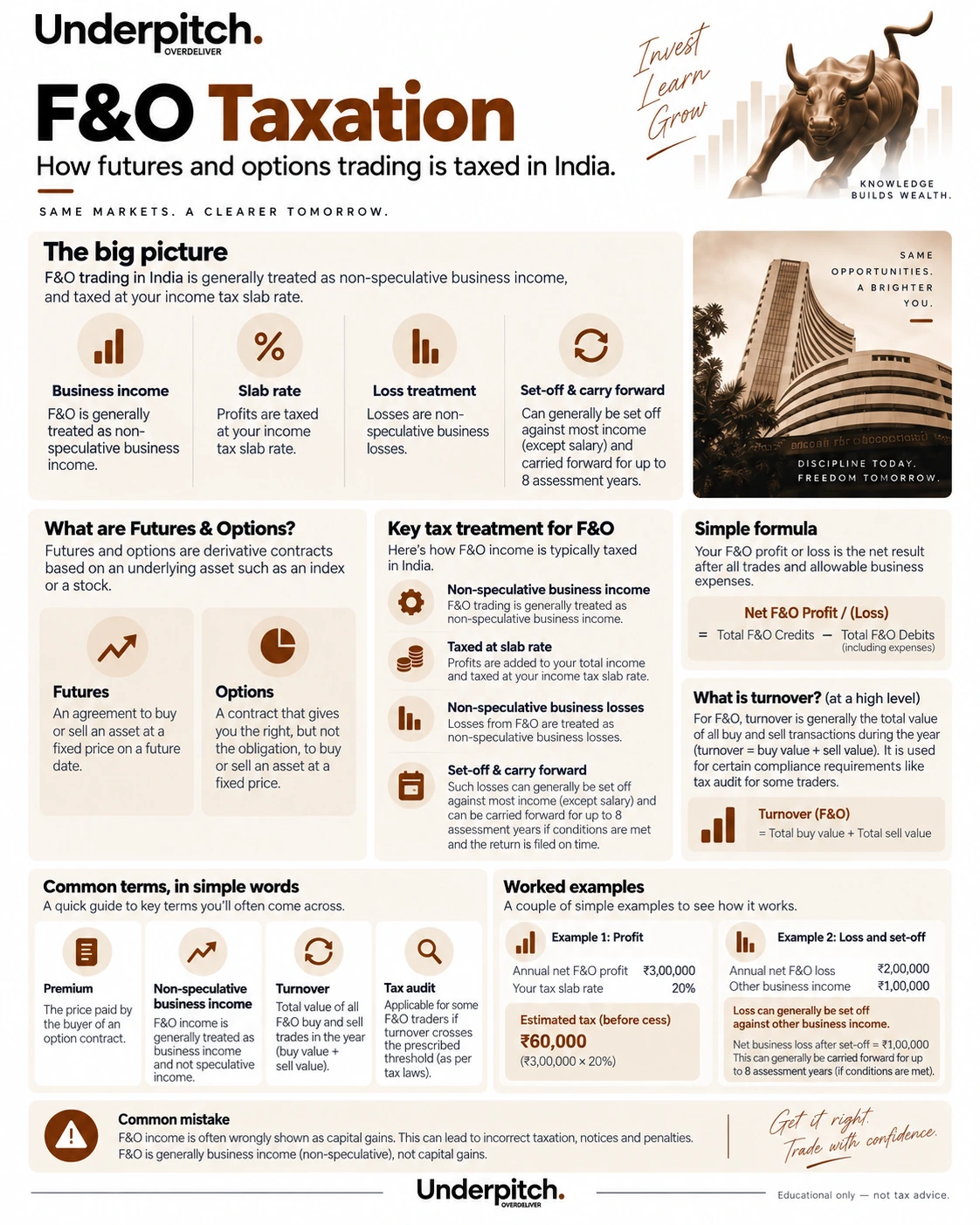
Futures & options
Exchange-traded F&O is generally treated as non-speculative business income for income-tax purposes. Profit is taxed at the applicable rate for the taxpayer. Business-loss set-off, books, turnover and tax-audit rules require case-specific analysis.
Dividends
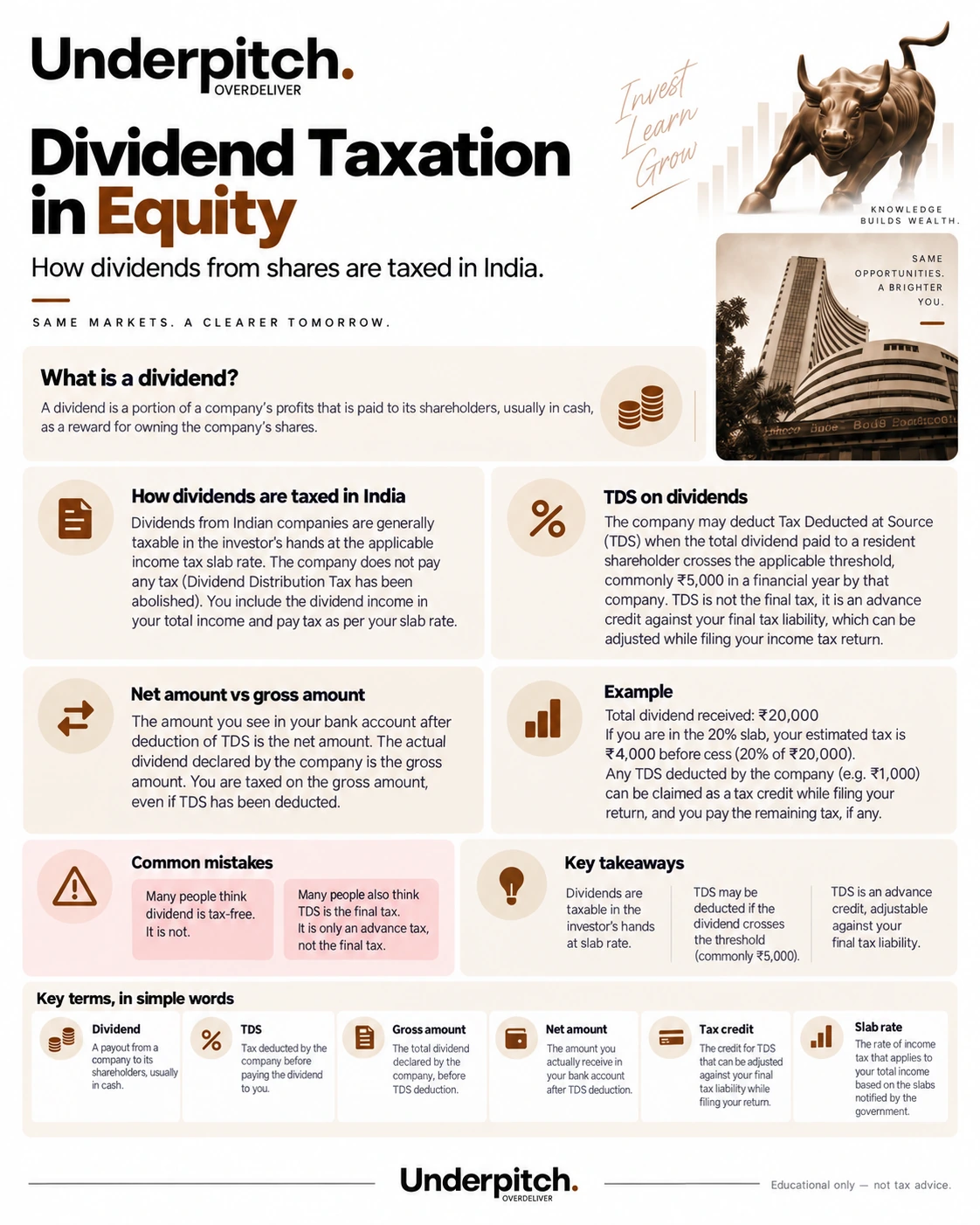
Dividends from Indian companies are generally taxable in the shareholder’s hands at the applicable rate. For a resident individual shareholder, Section 194 currently uses a ₹10,000 annual threshold per company for TDS applicability; the TDS rate is generally 10% where applicable. TDS is a tax credit, not necessarily your final tax.
STT — Securities Transaction Tax
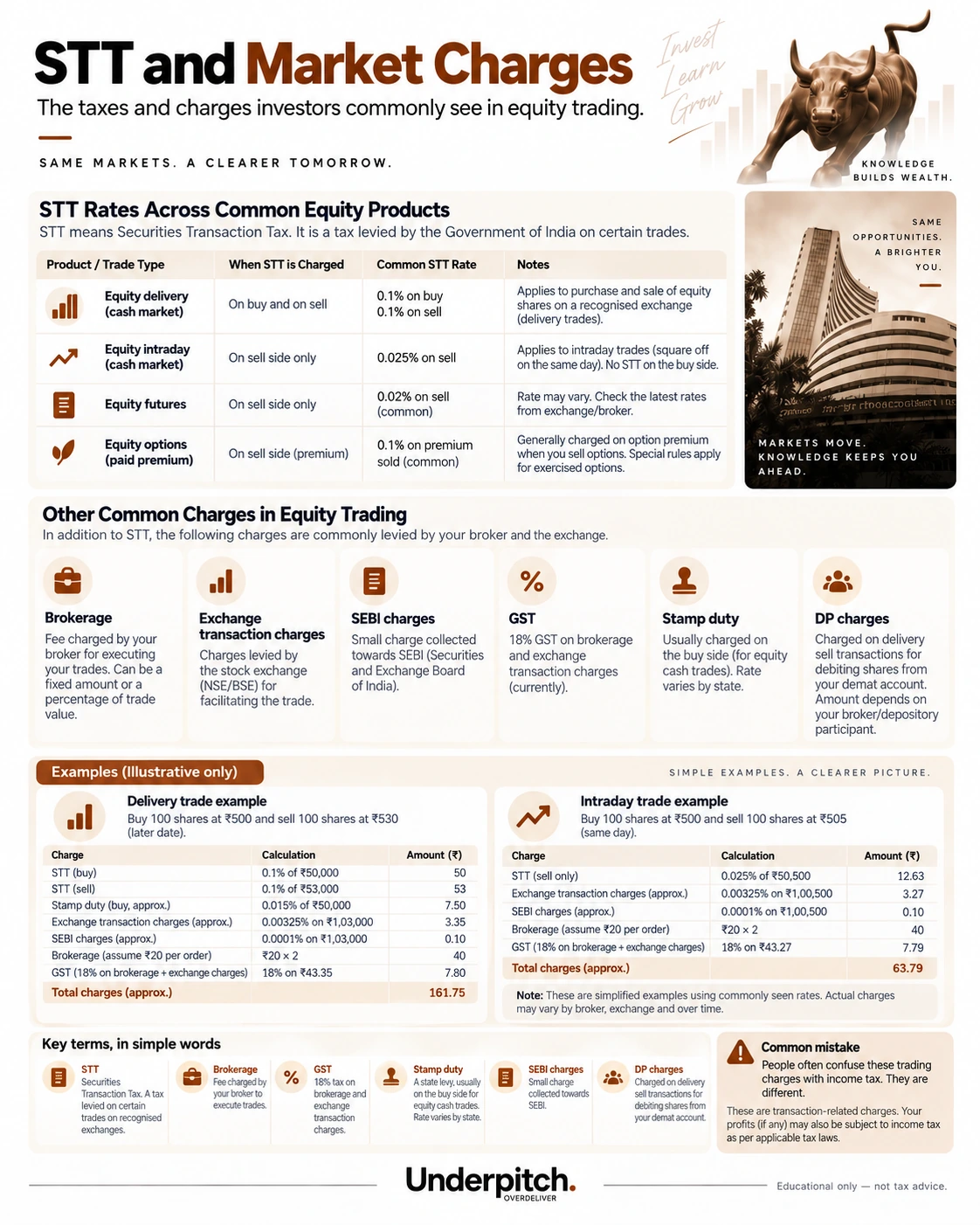
STT is a transaction tax collected on specified exchange trades. Current statutory rates include:
| Transaction | Current STT | Who pays |
|---|---|---|
| Delivery equity purchase | 0.1% | Buyer |
| Delivery equity sale | 0.1% | Seller |
| Equity intraday / non-delivery sale | 0.025% | Seller |
| Futures sale | 0.05% | Seller |
| Options sale | 0.15% of option premium | Seller |
| Option exercise | 0.15% on prescribed taxable value | Purchaser |
Other market charges
Depending on broker and segment, a trade can include brokerage, exchange transaction charges, SEBI regulatory charges, GST on specified service charges, stamp duty and DP/depository charges on delivery debits. These are different from income tax and can change by broker/exchange/state or regulation.
Loss set-off and filing
Short-term capital loss can generally be set off against STCG or LTCG; long-term capital loss generally only against LTCG. Capital losses may generally be carried forward for up to 8 assessment years when conditions are met. Speculative intraday losses have different rules from non-speculative F&O losses. Timely filing is important for carrying forward many losses.